ARG70925
Human BCAP31 / BAP31 recombinant protein (His-tagged, C-ter)
Human BCAP31 / BAP31 recombinant protein (His-tagged, C-ter) for SDS-PAGE
Overview
| Product Description | HEK293 expressed, His-tagged (C-ter) BCAP31 / BAP31 recombinant protein |
|---|---|
| Tested Application | SDS-PAGE |
| Target Name | BCAP31 / BAP31 |
| Species | Human |
| A.A. Sequence | Ala131 - Pro240 |
| Expression System | HEK293 |
| Alternate Names | BAP31; Bap31; 6C6-AG; DXS1357E; CDM; BCR-associated protein 31; 6C6-AG tumor-associated antigen; p28; Protein CDM; B-cell receptor-associated protein 31; DDCH |
Properties
| Form | Powder |
|---|---|
| Buffer | PBS |
| Reconstitution | It is recommended to reconstitute the lyophilized protein in sterile water to a concentration approximately 1 mg/mL and incubate the stock solution for at least 20 min at room temperature to make sure the protein is dissolved completely. |
| Storage Instruction | For long term, lyophilized protein should be stored at -20°C or -80°C, protected from light and moisture, for up to 12 months. After reconstitution , aliquot and store at 2 to 8°C for up to 2 days, or at -20°C or -80°C for up to 3 months Storage in frost free freezers is not recommended. Avoid repeated freeze/thaw cycles. Suggest spin the vial prior to opening. |
Bioinformation
| Gene Symbol | BCAP31 |
|---|---|
| Gene Full Name | B-cell receptor-associated protein 31 |
| Background | This gene encodes a member of the B-cell receptor associated protein 31 superfamily. The encoded protein is a multi-pass transmembrane protein of the endoplasmic reticulum that is involved in the anterograde transport of membrane proteins from the endoplasmic reticulum to the Golgi and in caspase 8-mediated apoptosis. Microdeletions in this gene are associated with contiguous ABCD1/DXS1375E deletion syndrome (CADDS), a neonatal disorder. Alternative splicing of this gene results in multiple transcript variants. Two related pseudogenes have been identified on chromosome 16. [provided by RefSeq, Jan 2012] |
| Function | Functions as a chaperone protein. Is one of the most abundant endoplasmic reticulum (ER) proteins. Plays a role in the export of secreted proteins in the ER, the recognition of abnormally folded protein and their targeting to the ER associated-degradation (ERAD). Also serves as a cargo receptor for the export of transmembrane proteins. May be involved in CASP8-mediated apoptosis. [UniProt] |
| PTM | Cleaved by CASP8 and other caspases. |
Images (1) Click the Picture to Zoom In
-
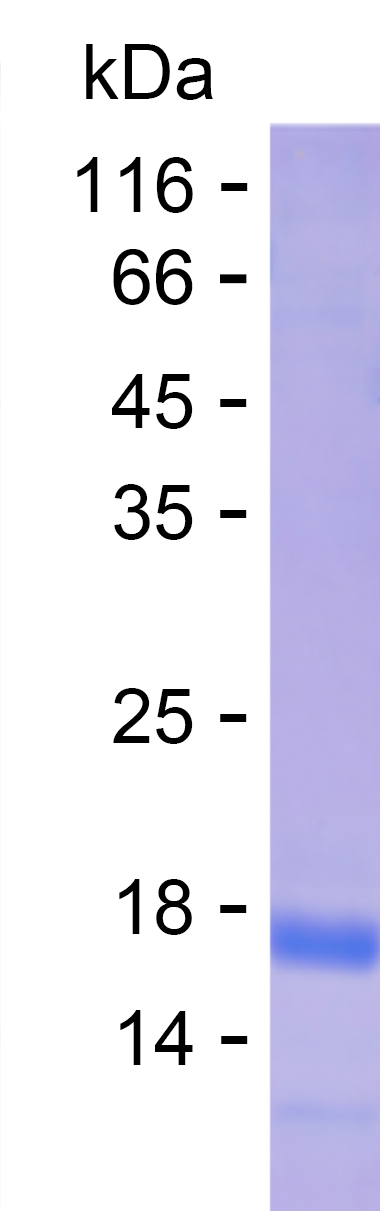
ARG70925 Human BCAP31 / BAP31 recombinant protein (His-tagged, C-ter) SDS-PAGE image
SDS-PAGE analysis of ARG70925 Human BCAP31 / BAP31 recombinant protein (His-tagged, C-ter).