ARG70846
Human CA2 / Carbonic Anhydrase 2 recombinant protein (His-tagged, C-ter)
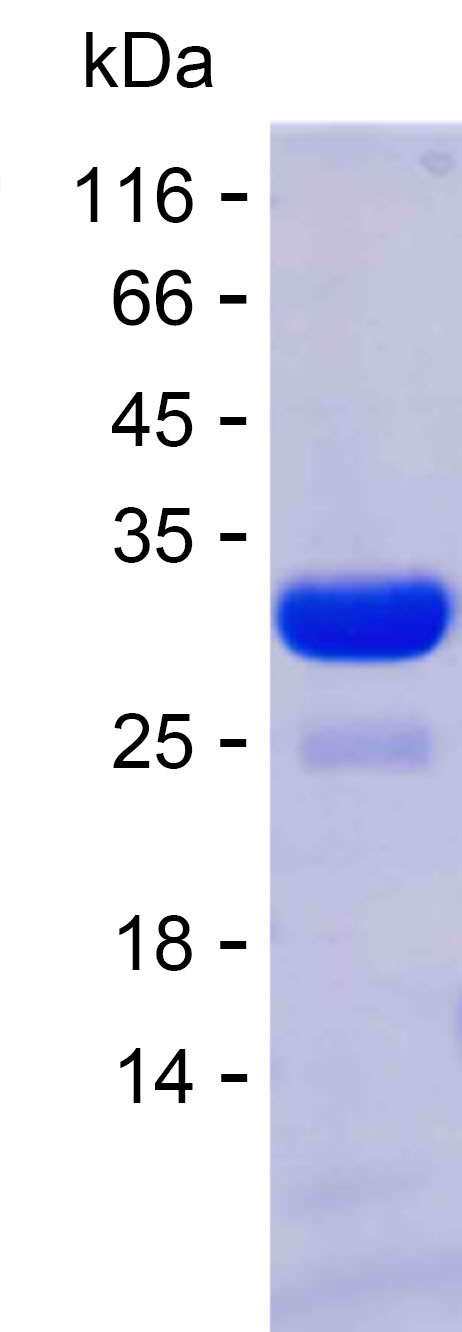
Human CA2 / Carbonic Anhydrase 2 recombinant protein (His-tagged, C-ter) for SDS-PAGE
Overview
| Product Description | E. coli expressed, His-tagged (C-ter) CA2 / Carbonic Anhydrase 2 recombinant protein |
|---|---|
| Tested Application | SDS-PAGE |
| Target Name | CA2 / Carbonic Anhydrase 2 |
| Species | Human |
| A.A. Sequence | Met1 - Lys260 |
| Expression System | E. coli |
| Alternate Names | Carbonic anhydrase C; EC 4.2.1.1; Car2; Carbonate dehydratase II; CA-II; Carbonic anhydrase II; CAC; HEL-76; Carbonic anhydrase 2; CAII |
Properties
| Form | Powder |
|---|---|
| Buffer | PBS |
| Reconstitution | It is recommended to reconstitute the lyophilized protein in sterile water to a concentration approximately 1 mg/mL and incubate the stock solution for at least 20 min at room temperature to make sure the protein is dissolved completely. |
| Storage Instruction | For long term, lyophilized protein should be stored at -20°C or -80°C, protected from light and moisture, for up to 12 months. After reconstitution , aliquot and store at 2 to 8°C for up to 2 days, or at -20°C or -80°C for up to 3 months Storage in frost free freezers is not recommended. Avoid repeated freeze/thaw cycles. Suggest spin the vial prior to opening. |
Bioinformation
| Gene Symbol | CA2 |
|---|---|
| Gene Full Name | carbonic anhydrase II |
| Background | The protein encoded by this gene is one of several isozymes of carbonic anhydrase, which catalyzes reversible hydration of carbon dioxide. Defects in this enzyme are associated with osteopetrosis and renal tubular acidosis. Two transcript variants encoding different isoforms have been found for this gene. [provided by RefSeq, Jun 2014] |
| Function | Essential for bone resorption and osteoclast differentiation (By similarity). Reversible hydration of carbon dioxide. Can hydrate cyanamide to urea. Involved in the regulation of fluid secretion into the anterior chamber of the eye. Contributes to intracellular pH regulation in the duodenal upper villous epithelium during proton-coupled peptide absorption. Stimulates the chloride-bicarbonate exchange activity of SLC26A6. [UniProt] |
Images (1) Click the Picture to Zoom In
-
ARG70846 Human CA2 / Carbonic Anhydrase 2 recombinant protein (His-tagged, C-ter) SDS-PAGE image
SDS-PAGE analysis of ARG70846 Human CA2 / Carbonic Anhydrase 2 recombinant protein (His-tagged, C-ter).