ARG70824
Human CD66e / CEA recombinant protein (Active) (His-tagged, C-ter)
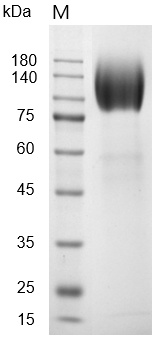
Human CD66e / CEA recombinant protein (Active) (His-tagged, C-ter) for SDS-PAGE
Overview
| Product Description | CHO expressed, His-tagged (C-ter) Active CD66e / CEA recombinant protein |
|---|---|
| Tested Application | SDS-PAGE |
| Target Name | CD66e / CEA |
| Species | Human |
| A.A. Sequence | Met 1 - Ala 685 |
| Expression System | CHO |
| Activity | Active |
| Activity Note | Determinedd by its ability to bind human Galectin-4 in functional ELISA. Immobilized Recombinant human Galectin-4 Protein at 5 μg/mL (100 μL/well) can bind Recombinant Human CEACAM5 Protein. |
| Alternate Names | Carcinoembryonic antigen-related cell adhesion molecule 5; CEA; CD66e; CD antigen CD66e; Carcinoembryonic antigen; Meconium antigen 100 |
Properties
| Form | Powder |
|---|---|
| Purification Note | Endotoxin level is less than 0.1 EU/µg of the protein, as determined by the LAL test. |
| Purity | > 95% (by SDS-PAGE) |
| Buffer | PBS (pH 7.4) |
| Reconstitution | It is recommended to reconstitute the lyophilized protein in sterile water to a concentration not less than 200 μg/mL and incubate the stock solution for at least 20 min at room temperature to make sure the protein is dissolved completely. |
| Storage Instruction | For long term, lyophilized protein should be stored at -20°C or -80°C. After reconstitution, aliquot and store at -20°C or -80°C for up to one month. Storage in frost free freezers is not recommended. Avoid repeated freeze/thaw cycles. Suggest spin the vial prior to opening. |
| Note | For laboratory research only, not for drug, diagnostic or other use. |
Bioinformation
| Gene Symbol | CEACAM5 |
|---|---|
| Gene Full Name | carcinoembryonic antigen-related cell adhesion molecule 5 |
| Background | Carcinoembryonic Antigen (CEA) is a 180-200 KD glycoprotein expressed at high level in the epithelial cells of the embryonic colon. The expression is stopped after birth. CEA serum content is low in normal population and only slightly elevated in heavy smokers. Increased serum CEA level was found to be associated with colorectal carcinoma, gastric carcinoma, pancreatic carcinoma, lung carcinoma, and breast carcinoma. However elevated CEA level does not necessarily indicate neoplastic conditions. CEA level is useful for monitoring tumour recurrence after surgical resection of carcinoma. |
| Function | Cell surface glycoprotein that plays a role in cell adhesion and in intracellular signaling. Receptor for E.coli Dr adhesins. [UniProt] |
| PTM | Complex immunoreactive glycoprotein with a MW of 180 kDa comprising 60% carbohydrate. |
Images (1) Click the Picture to Zoom In
-

ARG70824 Human CD66e / CEA recombinant protein (Active) (His-tagged, C-ter) SDS-PAGE image
SDS-PAGE analysis of ARG70824 Human CD66e / CEA recombinant protein (Active) (His-tagged, C-ter).