ARG70799
Human CGRP recombinant protein (His-tagged, C-ter)
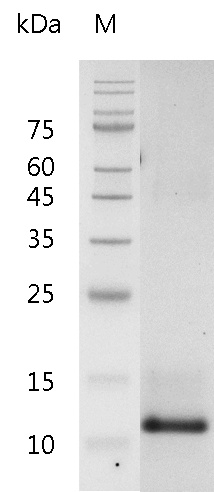
Human CGRP recombinant protein (His-tagged, C-ter) for SDS-PAGE
Overview
| Product Description | HEK293 expressed, His-tagged (C-ter) CGRP recombinant protein |
|---|---|
| Tested Application | SDS-PAGE |
| Target Name | CGRP |
| Species | Human |
| A.A. Sequence | Met1 - Asn141 |
| Expression System | HEK293 |
| Alternate Names | CALC1; CGRP-I; Calcitonin gene-related peptide 1; CGRP1; Calcitonin gene-related peptide I; Alpha-type CGRP; CGRP |
Properties
| Form | Powder |
|---|---|
| Purification Note | Endotoxin level is less than 0.1 EU/µg of the protein, as determined by the LAL test. |
| Purity | > 85% (by SDS-PAGE) |
| Buffer | PBS (pH 7.4) |
| Reconstitution | It is recommended to reconstitute the lyophilized protein in 4 mM HCl to a concentration not less than 200 μg/mL and incubate the stock solution for at least 20 min at room temperature to make sure the protein is dissolved completely. |
| Storage Instruction | For long term, lyophilized protein should be stored at -20°C or -80°C. After reconstitution, aliquot and store at -20°C or -80°C for up to one month. Storage in frost free freezers is not recommended. Avoid repeated freeze/thaw cycles. Suggest spin the vial prior to opening. |
| Note | For laboratory research only, not for drug, diagnostic or other use. |
Bioinformation
| Gene Symbol | CALCA |
|---|---|
| Gene Full Name | Calcitonin gene-related peptide 1 |
| Background | This gene encodes the peptide hormones calcitonin, calcitonin gene-related peptide and katacalcin by tissue-specific alternative RNA splicing of the gene transcripts and cleavage of inactive precursor proteins. Calcitonin is involved in calcium regulation and acts to regulate phosphorus metabolism. Calcitonin gene-related peptide functions as a vasodilator and as an antimicrobial peptide while katacalcin is a calcium-lowering peptide. Multiple transcript variants encoding different isoforms have been found for this gene. [provided by RefSeq, Aug 2014] |
| Function | CGRP induces vasodilation. It dilates a variety of vessels including the coronary, cerebral and systemic vasculature. Its abundance in the CNS also points toward a neurotransmitter or neuromodulator role. It also elevates platelet cAMP. [UniProt] |
Images (1) Click the Picture to Zoom In
-

ARG70799 Human CGRP recombinant protein (His-tagged, C-ter) SDS-PAGE image
SDS-PAGE analysis of ARG70799 Human CGRP recombinant protein (His-tagged, C-ter).