ARG70626
Human CX3CL1 recombinant protein (Active)
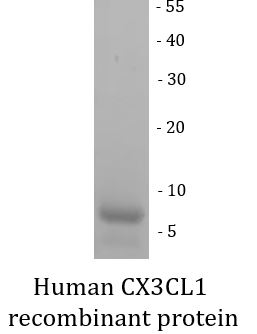
Human CX3CL1 recombinant protein (Active) for SDS-PAGE
Overview
| Product Description | E. coli expressed, Active Human CX3CL1 recombinant protein |
|---|---|
| Tested Application | SDS-PAGE |
| Target Name | CX3CL1 |
| Species | Human |
| A.A. Sequence | Gln25 - Gly100 |
| Expression System | E. coli |
| Activity | Active |
| Activity Note | Determined by a chemotaxis bioassay using human T- lymphocytes is in a concentration of 5.0 - 10 ng/ml. |
| Alternate Names | neurotactin; CXC3; C3Xkine; NTN; NTT; C-X3-C motif chemokine 1; CXC3C; Neurotactin; ABCD-3; SCYD1; Fractalkine; Small-inducible cytokine D1; CX3C membrane-anchored chemokine; fractalkine |
Properties
| Form | Powder |
|---|---|
| Purification Note | Endotoxin level is less than 0.1 EU/µg of the protein, as determined by the LAL test. |
| Purity | > 98% (by SDS-PAGE or HPLC). |
| Buffer | PBS(pH7.4) |
| Reconstitution | It is recommended to reconstitute the lyophilized protein in sterile distilled water or aqueous buffer containing 0.1% BSA to a concentration of 0.1-1.0 mg/ml and incubate the stock solution for at least 20 min at room temperature to make sure the protein is dissolved completely. |
| Storage Instruction | For long term, lyophilized protein should be stored at -20°C or -80°C. After reconstitution, aliquot and store at -20°C or -80°C for up to one month. Storage in frost free freezers is not recommended. Avoid repeated freeze/thaw cycles. Suggest spin the vial prior to opening. |
| Note | For laboratory research only, not for drug, diagnostic or other use. |
Bioinformation
| Gene Symbol | CX3CL1 |
|---|---|
| Gene Full Name | chemokine (C-X3-C motif) ligand 1 |
| Function | The soluble form is chemotactic for T-cells and monocytes, but not for neutrophils. The membrane-bound form promotes adhesion of those leukocytes to endothelial cells. May play a role in regulating leukocyte adhesion and migration processes at the endothelium. Binds to CX3CR1. [UniProt] |
| PTM | A soluble short 95 kDa form may be released by proteolytic cleavage from the long membrane-anchored form. O-glycosylated with core 1 or possibly core 8 glycans. |
Images (1) Click the Picture to Zoom In
-
ARG70626 Human CX3CL1 recombinant protein (Active) SDS-PAGE image
SDS-PAGE analysis of ARG70626 Human CX3CL1 recombinant protein (Active)