ARG70882
Human IL8 recombinant protein (V5-tagged, N-ter / His-tagged, C-ter)
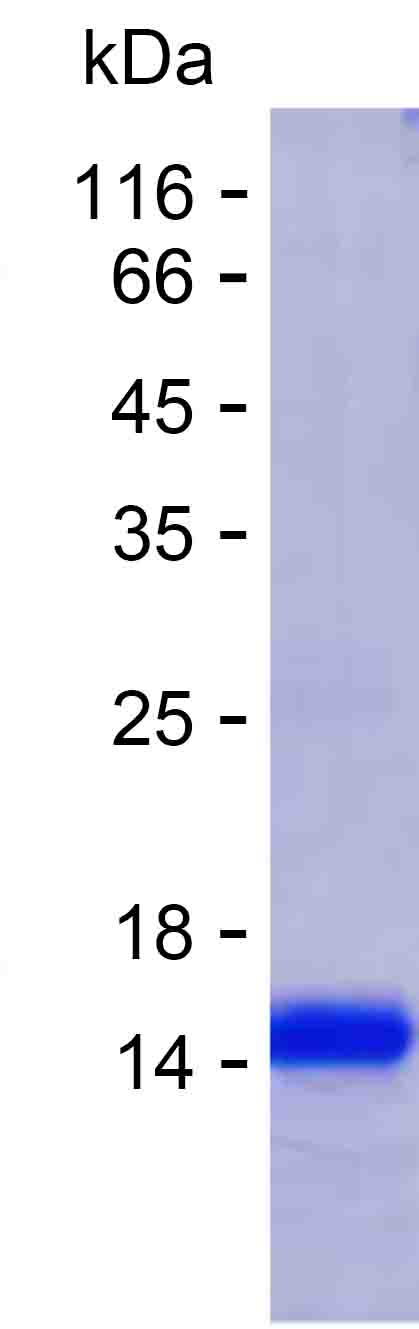
Human IL8 recombinant protein (V5-tagged, N-ter / His-tagged, C-ter) for SDS-PAGE
Overview
| Product Description | E. coli expressed, Human V5-tagged (N-ter) / His-tagged (C-ter) IL8 recombinant protein |
|---|---|
| Tested Application | SDS-PAGE |
| Target Name | IL8 |
| Species | Human |
| A.A. Sequence | Glu31 - Glu90 |
| Expression System | E. coli |
| Alternate Names | IL8/NAP1 form IV; GCP/IL-8 protein IV; NAF; T-cell chemotactic factor; 1-77; Ala-IL-8; Interleukin-8; IL-8; Neutrophil-activating protein 1; GCP/IL-8 protein II; IL8/NAP1 form II; GCP/IL-8 protein V; MDNCF; Protein 3-10C; Lymphocyte-derived neutrophil-activating factor; Neutrophil-activating factor; Granulocyte chemotactic protein 1; LYNAP; NAP-1; Monocyte-derived neutrophil chemotactic factor; 6-77; 7-77; C-X-C motif chemokine 8; GCP1; NAP1; Ser-IL-8; 5-77; GCP/IL-8 protein VI; IL8/NAP1 form I; IL8/NAP1 form VI; Monocyte-derived neutrophil-activating peptide; C-X-C motif; 8-77; 9-77; LUCT; Chemokine; GCP-1; MDNCF-b; MDNCF-c; IL8/NAP1 form V; LECT; IL8/NAP1 form III; GCP/IL-8 protein III; Emoctakin; GCP/IL-8 protein I; MONAP; IL8 |
Properties
| Form | Powder |
|---|---|
| Buffer | PBS |
| Reconstitution | It is recommended to reconstitute the lyophilized protein in sterile water to a concentration approximately 1 mg/mL and incubate the stock solution for at least 20 min at room temperature to make sure the protein is dissolved completely. |
| Storage Instruction | For long term, lyophilized protein should be stored at -20°C or -80°C, protected from light and moisture, for up to 12 months. After reconstitution , aliquot and store at 2 to 8°C for up to 2 days, or at -20°C or -80°C for up to 3 months Storage in frost free freezers is not recommended. Avoid repeated freeze/thaw cycles. Suggest spin the vial prior to opening. |
Bioinformation
| Gene Symbol | CXCL8 |
|---|---|
| Gene Full Name | chemokine (C-X-C motif) ligand 8 |
| Background | Interleukin 8 (IL-8), like IL-6, is secreted by macrophages and a variety of cells that express Toll-like receptors in response to the stimulation of pathogens. IL-8's primary function is to recruit neutrophils and other target cells through chemotaxis to the infected site to eliminate pathogens. IL-8 causes increased intracellular Ca2+, release of reactive oxygen species, and other physiological changes required for migration and phagocytosis. IL-8 is also known to promote angiogenesis. |
| Function | IL-8 is a chemotactic factor that attracts neutrophils, basophils, and T-cells, but not monocytes. It is also involved in neutrophil activation. It is released from several cell types in response to an inflammatory stimulus. IL-8(6-77) has a 5-10-fold higher activity on neutrophil activation, IL-8(5-77) has increased activity on neutrophil activation and IL-8(7-77) has a higher affinity to receptors CXCR1 and CXCR2 as compared to IL-8(1-77), respectively. [UniProt] |
| PTM | Several N-terminal processed forms are produced by proteolytic cleavage after secretion from at least peripheral blood monocytes, leukcocytes and endothelial cells. In general, IL-8(1-77) is referred to as interleukin-8. IL-8(6-77) is the most promiment form. Citrullination at Arg-27 prevents proteolysis, and dampens tissue inflammation, it also enhances leukocytosis, possibly through impaired chemokine clearance from the blood circulation. |
Images (1) Click the Picture to Zoom In
-
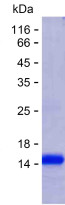
ARG70882 Human IL8 recombinant protein (V5-tagged, N-ter / His-tagged, C-ter) SDS-PAGE image
SDS-PAGE analysis of ARG70882 Human IL8 recombinant protein (V5-tagged, N-ter / His-tagged, C-ter).