ARG70890
Human RSPO3 recombinant protein (His-tagged, C-ter)
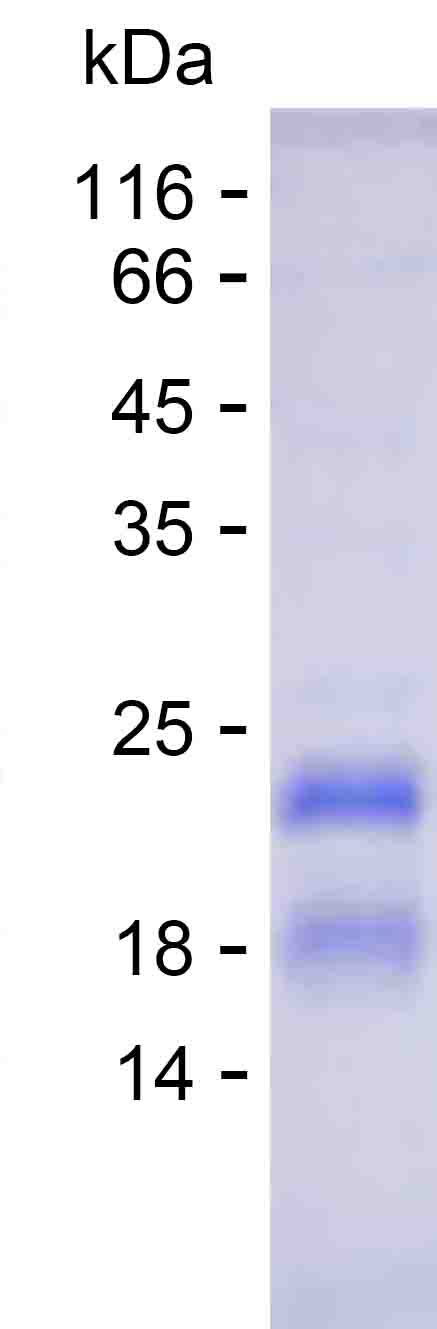
Human RSPO3 recombinant protein (His-tagged, C-ter) for SDS-PAGE
Overview
| Product Description | E. coli expressed, His-tagged (C-ter) RSPO3 recombinant protein |
|---|---|
| Tested Application | SDS-PAGE |
| Target Name | RSPO3 |
| Species | Human |
| A.A. Sequence | Ser151 - Thr270 |
| Expression System | E. coli |
| Alternate Names | Thrombospondin type-1 domain-containing protein 2; PWTSR; R-spondin-3; hRspo3; THSD2; CRISTIN1; Roof plate-specific spondin-3; Protein with TSP type-1 repeat; hPWTSR |
Properties
| Form | Powder |
|---|---|
| Buffer | PBS |
| Reconstitution | It is recommended to reconstitute the lyophilized protein in sterile water to a concentration approximately 1 mg/mL and incubate the stock solution for at least 20 min at room temperature to make sure the protein is dissolved completely. |
| Storage Instruction | For long term, lyophilized protein should be stored at -20°C or -80°C, protected from light and moisture, for up to 12 months. After reconstitution , aliquot and store at 2 to 8°C for up to 2 days, or at -20°C or -80°C for up to 3 months Storage in frost free freezers is not recommended. Avoid repeated freeze/thaw cycles. Suggest spin the vial prior to opening. |
Bioinformation
| Gene Symbol | RSPO3 |
|---|---|
| Gene Full Name | R-spondin 3 |
| Background | This gene belongs to the R-spondin family. The encoded protein plays a role in the regulation of Wnt (wingless-type MMTV integration site family)/beta-catenin and Wnt/planar cell polarity (PCP) signaling pathways, which are involved in development, cell growth and disease pathogenesis. Genome-wide association studies suggest a correlation of this gene with bone mineral density and risk of fracture. This gene may be involved in tumor development. [provided by RefSeq, Jul 2013] |
| Function | Activator of the canonical Wnt signaling pathway by acting as a ligand for LGR4-6 receptors. Upon binding to LGR4-6 (LGR4, LGR5 or LGR6), LGR4-6 associate with phosphorylated LRP6 and frizzled receptors that are activated by extracellular Wnt receptors, triggering the canonical Wnt signaling pathway to increase expression of target genes. Also regulates the canonical Wnt/beta-catenin-dependent pathway and non-canonical Wnt signaling by acting as an inhibitor of ZNRF3, an important regulator of the Wnt signaling pathway. Acts as a ligand for frizzled FZD8 and LRP6. May negatively regulate the TGF-beta pathway. [UniProt] |
Images (1) Click the Picture to Zoom In
-
ARG70890 Human RSPO3 recombinant protein (His-tagged, C-ter) SDS-PAGE image
SDS-PAGE analysis of ARG70890 Human RSPO3 recombinant protein (His-tagged, C-ter).