ARG70900
Human S100A11 recombinant protein (mSUMO-tagged, N-ter / His-tagged, C-ter)
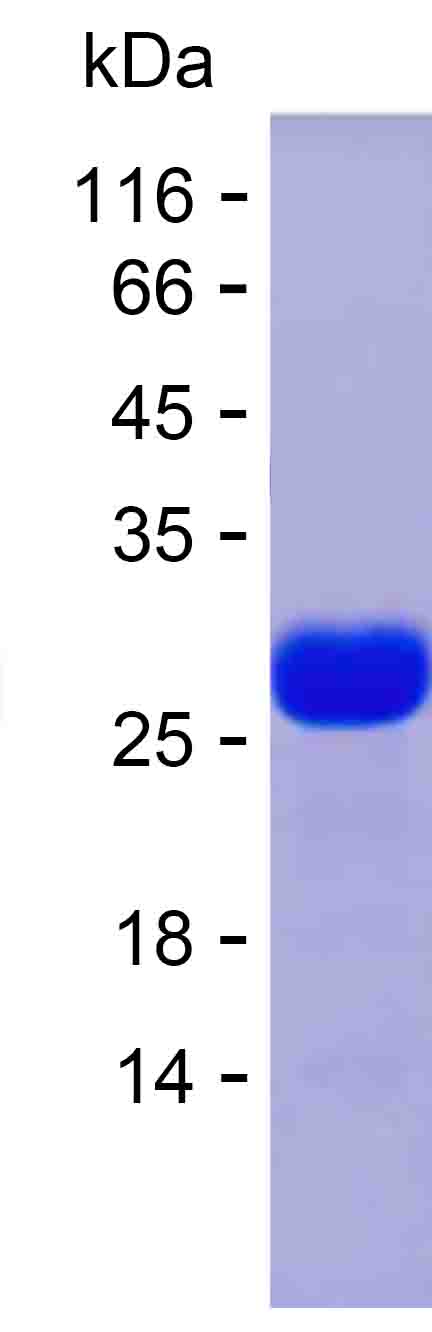
Human S100A11 recombinant protein (mSUMO-tagged, N-ter / His-tagged, C-ter) for SDS-PAGE
Overview
| Product Description | E. coli expressed, Human mSUMO-tagged (N-ter) / His-tagged (C-ter) S100A11 recombinant protein |
|---|---|
| Tested Application | SDS-PAGE |
| Target Name | S100A11 |
| Species | Human |
| A.A. Sequence | Glu11 - Ala90 |
| Expression System | E. coli |
| Alternate Names | S100 calcium-binding protein A11; MLN70; MLN 70; Protein S100-C; HEL-S-43; Metastatic lymph node gene 70 protein; Protein S100-A11; S100C; Calgizzarin |
Properties
| Form | Powder |
|---|---|
| Buffer | PBS |
| Reconstitution | It is recommended to reconstitute the lyophilized protein in sterile water to a concentration approximately 1 mg/mL and incubate the stock solution for at least 20 min at room temperature to make sure the protein is dissolved completely. |
| Storage Instruction | For long term, lyophilized protein should be stored at -20°C or -80°C, protected from light and moisture, for up to 12 months. After reconstitution , aliquot and store at 2 to 8°C for up to 2 days, or at -20°C or -80°C for up to 3 months Storage in frost free freezers is not recommended. Avoid repeated freeze/thaw cycles. Suggest spin the vial prior to opening. |
Bioinformation
| Gene Symbol | S100A11 |
|---|---|
| Gene Full Name | S100 calcium binding protein A11 |
| Background | The protein encoded by this gene is a member of the S100 family of proteins containing 2 EF-hand calcium-binding motifs. S100 proteins are localized in the cytoplasm and/or nucleus of a wide range of cells, and involved in the regulation of a number of cellular processes such as cell cycle progression and differentiation. S100 genes include at least 13 members which are located as a cluster on chromosome 1q21. This protein may function in motility, invasion, and tubulin polymerization. Chromosomal rearrangements and altered expression of this gene have been implicated in tumor metastasis. [provided by RefSeq, Jul 2008] |
| Function | Facilitates the differentiation and the cornification of keratinocytes. [UniProt] |
| PTM | Phosphorylation at Thr-10 by PRKCA significantly suppresses homodimerization and promotes association with NCL/nucleolin which induces nuclear translocation. |
Images (1) Click the Picture to Zoom In
-
ARG70900 Human S100A11 recombinant protein (mSUMO-tagged, N-ter / His-tagged, C-ter) SDS-PAGE image
SDS-PAGE analysis of ARG70900 Human S100A11 recombinant protein (mSUMO-tagged, N-ter / His-tagged, C-ter).