ARG70866
Human UCHL1 / PGP9.5 recombinant protein (His-tagged, C-ter)
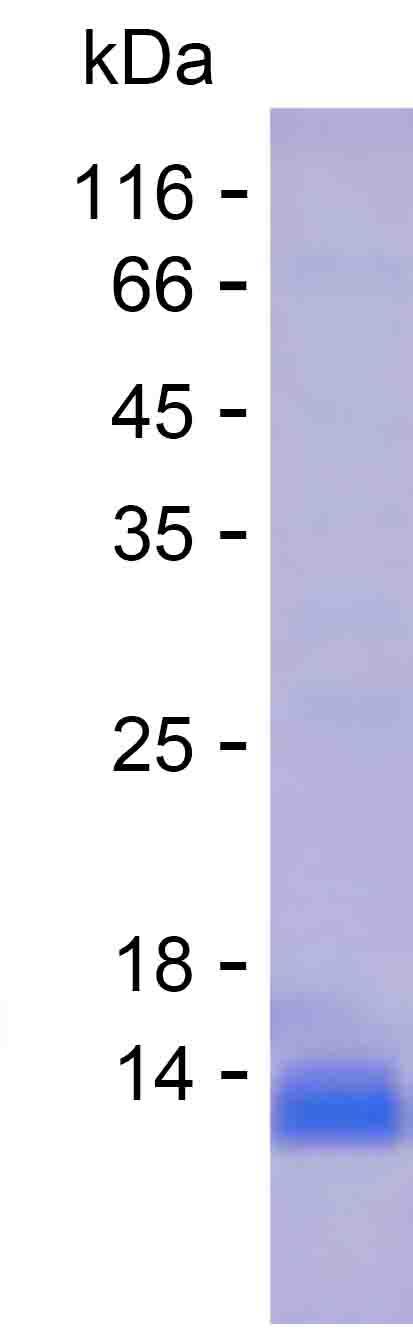
Human UCHL1 / PGP9.5 recombinant protein (His-tagged, C-ter) for SDS-PAGE
Overview
| Product Description | E. coli expressed, His-tagged (C-ter) UCHL1 / PGP9.5 recombinant protein |
|---|---|
| Tested Application | SDS-PAGE |
| Target Name | UCHL1 / PGP9.5 |
| Species | Human |
| A.A. Sequence | Gly111 - Gly210 |
| Expression System | E. coli |
| Alternate Names | PGP95; UCH-L1; PGP9.5; PARK5; Ubiquitin thioesterase L1; HEL-117; Neuron cytoplasmic protein 9.5; Uch-L1; PGP 9.5; Ubiquitin carboxyl-terminal hydrolase isozyme L1; NDGOA; EC 3.4.19.12 |
Properties
| Form | Powder |
|---|---|
| Buffer | PBS |
| Reconstitution | It is recommended to reconstitute the lyophilized protein in sterile water to a concentration approximately 1 mg/mL and incubate the stock solution for at least 20 min at room temperature to make sure the protein is dissolved completely. |
| Storage Instruction | For long term, lyophilized protein should be stored at -20°C or -80°C, protected from light and moisture, for up to 12 months. After reconstitution , aliquot and store at 2 to 8°C for up to 2 days, or at -20°C or -80°C for up to 3 months Storage in frost free freezers is not recommended. Avoid repeated freeze/thaw cycles. Suggest spin the vial prior to opening. |
Bioinformation
| Gene Symbol | UCHL1 |
|---|---|
| Gene Full Name | ubiquitin carboxyl-terminal esterase L1 (ubiquitin thiolesterase) |
| Background | The protein encoded by this gene belongs to the peptidase C12 family. This enzyme is a thiol protease that hydrolyzes a peptide bond at the C-terminal glycine of ubiquitin. This gene is specifically expressed in the neurons and in cells of the diffuse neuroendocrine system. Mutations in this gene may be associated with Parkinson disease.[provided by RefSeq, Sep 2009] |
| Function | Ubiquitin-protein hydrolase involved both in the processing of ubiquitin precursors and of ubiquitinated proteins. This enzyme is a thiol protease that recognizes and hydrolyzes a peptide bond at the C-terminal glycine of ubiquitin. Also binds to free monoubiquitin and may prevent its degradation in lysosomes. The homodimer may have ATP-independent ubiquitin ligase activity. [UniProt] |
| PTM | O-glycosylated. [UniProt] |
Images (1) Click the Picture to Zoom In
-
ARG70866 Human UCHL1 / PGP9.5 recombinant protein (His-tagged, C-ter) SDS-PAGE image
SDS-PAGE analysis of ARG70866 Human UCHL1 / PGP9.5 recombinant protein (His-tagged, C-ter).