ARG70818
Human alpha Fetoprotein recombinant protein (His-tagged, C-ter)
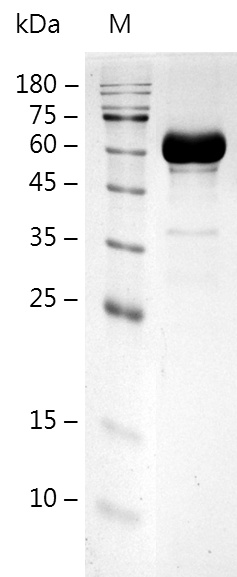
Human alpha Fetoprotein recombinant protein (His-tagged, C-ter) for SDS-PAGE
Overview
| Product Description | CHO expressed, His-tagged (C-ter) alpha Fetoprotein recombinant protein |
|---|---|
| Tested Application | SDS-PAGE |
| Target Name | alpha Fetoprotein |
| Species | Human |
| A.A. Sequence | Met 1 - Val 609 |
| Expression System | CHO |
| Alternate Names | Alpha-fetoprotein; HPAFP; FETA; Alpha-fetoglobulin; AFPD; Alpha-1-fetoprotein |
Properties
| Form | Powder |
|---|---|
| Purification Note | Endotoxin level is less than 0.1 EU/µg of the protein, as determined by the LAL test. |
| Purity | > 95% (by SDS-PAGE) |
| Buffer | PBS (pH 7.4) |
| Reconstitution | It is recommended to reconstitute the lyophilized protein in sterile water to a concentration not less than 200 μg/mL and incubate the stock solution for at least 20 min at room temperature to make sure the protein is dissolved completely. |
| Storage Instruction | For long term, lyophilized protein should be stored at -20°C or -80°C. After reconstitution, aliquot and store at -20°C or -80°C for up to one month. Storage in frost free freezers is not recommended. Avoid repeated freeze/thaw cycles. Suggest spin the vial prior to opening. |
| Note | For laboratory research only, not for drug, diagnostic or other use. |
Bioinformation
| Gene Symbol | AFP |
|---|---|
| Gene Full Name | alpha-fetoprotein |
| Background | Alpha fetoprotein (AFP) is a 70kD glycoprotein which is produced primarily by liver cells in foetuses. It exists in significant amount in foetal plasma and decreases rapidly after birth. Moderate amount of AFP exists in serum of pregnant women. Monitoring mother’s serum AFP level in second trimester pregnancy can help assessing birth defects such as Down syndrome, neural tube defect and anencephaly. Elevated AFP level in men, children and non-pregnant women is associated with neoplastic conditions in lever, testicle or ovary. |
| Function | Binds copper, nickel, and fatty acids as well as, and bilirubin less well than, serum albumin. Only a small percentage (<2%) of the human AFP shows estrogen-binding properties. [UniProt] |
| PTM | Independent studies suggest heterogeneity of the N-terminal sequence of the mature protein and of the cleavage site of the signal sequence. Sulfated. |
Images (1) Click the Picture to Zoom In
-

ARG70818 Human alpha Fetoprotein recombinant protein (His-tagged, C-ter) SDS-PAGE image
SDS-PAGE analysis of ARG70818 Human alpha Fetoprotein recombinant protein (His-tagged, C-ter).