ARG67302
anti-ACSL4 / FACL4 antibody [2B03]
anti-ACSL4 / FACL4 antibody [2B03] for Western blot,IHC-Formalin-fixed paraffin-embedded sections and Human,Mouse,Rat
Overview
| Product Description | Rabbit Monoclonal antibody [2B03] recognizes ACSL4 / FACL4 |
|---|---|
| Tested Reactivity | Hu, Ms, Rat |
| Tested Application | IHC-P, WB |
| Host | Rabbit |
| Clonality | Monoclonal |
| Clone | 2B03 |
| Isotype | IgG,Kappa |
| Target Name | ACSL4 / FACL4 |
| Conjugation | Un-conjugated |
| Alternate Names | Long-chain-fatty-acid--CoA ligase 4; ACS4; MRX68; Long-chain acyl-CoA synthetase 4; EC 6.2.1.3; FACL4; LACS4; LACS 4; MRX63 |
Application Instructions
| Application Suggestion |
|
||||||
|---|---|---|---|---|---|---|---|
| Application Note | * The dilutions indicate recommended starting dilutions and the optimal dilutions or concentrations should be determined by the scientist. |
Properties
| Form | Liquid |
|---|---|
| Purification | Purification with Protein A |
| Buffer | PBS, 0.05% Proclin 300, 0.05%BSA and 50% Glycerol. |
| Preservative | 0.05% Proclin 300 |
| Stabilizer | 0.05%BSA and 50% Glycerol. |
| Storage Instruction | For continuous use, store undiluted antibody at 2-8°C for up to a week. For long-term storage, aliquot and store at -20°C or below. Storage in frost free freezers is not recommended. Avoid repeated freeze/thaw cycles. Suggest spin the vial prior to opening. The antibody solution should be gently mixed before use. |
| Note | For laboratory research only, not for drug, diagnostic or other use. |
Bioinformation
| Database Links | |
|---|---|
| Gene Symbol | ACSL4 |
| Gene Full Name | acyl-CoA synthetase long-chain family member 4 |
| Background | The protein encoded by this gene is an isozyme of the long-chain fatty-acid-coenzyme A ligase family. Although differing in substrate specificity, subcellular localization, and tissue distribution, all isozymes of this family convert free long-chain fatty acids into fatty acyl-CoA esters, and thereby play a key role in lipid biosynthesis and fatty acid degradation. This isozyme preferentially utilizes arachidonate as substrate. The absence of this enzyme may contribute to the mental retardation or Alport syndrome. Alternative splicing of this gene generates 2 transcript variants. [provided by RefSeq, Jul 2008] |
| Function | Activation of long-chain fatty acids for both synthesis of cellular lipids, and degradation via beta-oxidation. Preferentially uses arachidonate and eicosapentaenoate as substrates. [UniProt] |
| Cellular Localization | Mitochondrion outer membrane; Single-pass type III membrane protein. Peroxisome membrane; Single-pass type III membrane protein. Microsome membrane; Single-pass type III membrane protein. Endoplasmic reticulum membrane; Single-pass type III membrane protein |
| Calculated MW | 79 kDa |
| PTM | N- and O-glycosylated, phosphorylated and palmitoylated. The serum form is only glycosylated. Proteolytically cleaved on Arg-100 to produce the soluble serum form (sTfR). Palmitoylated on both Cys-62 and Cys-67. Cys-62 seems to be the major site of palmitoylation. |
Images (6) Click the Picture to Zoom In
-
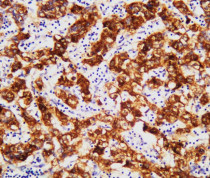
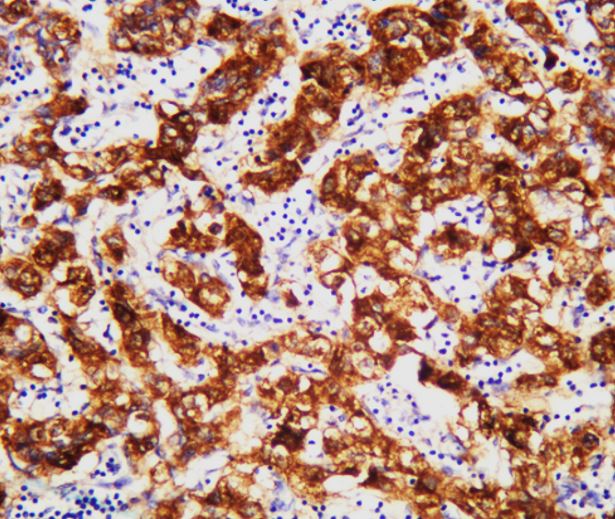
ARG67302 anti-ACSL4 / FACL4 antibody [2B03] IHC-P image
Immunohistochemistry: Human hepatocellular carcinoma stained with ARG67302 anti-ACSL4 / FACL4 antibody [2B03].
-
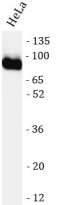
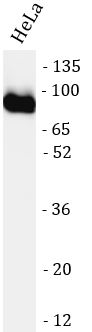
ARG67302 anti-ACSL4 / FACL4 antibody [2B03] WB image
Western blot: HeLa stained with ARG67302 anti-ACSL4 / FACL4 antibody [2B03].
-
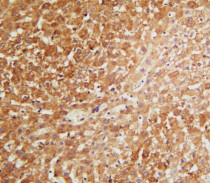
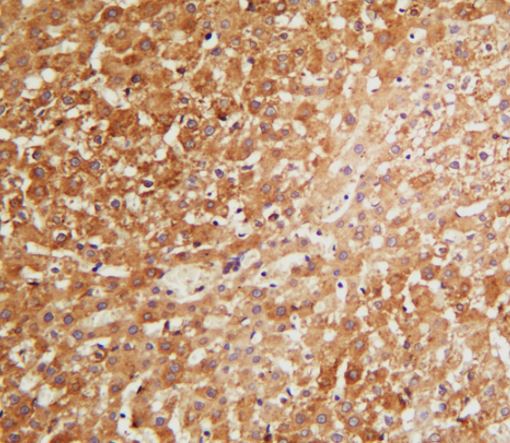
ARG67302 anti-ACSL4 / FACL4 antibody [2B03] IHC-P image
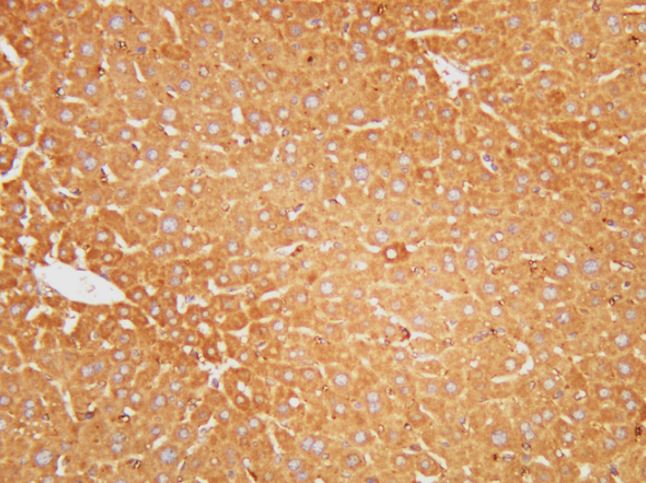
Immunohistochemistry: Rat liver stained with ARG67302 anti-ACSL4 / FACL4 antibody [2B03].
-
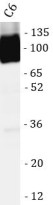
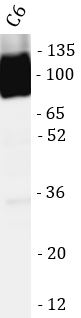
ARG67302 anti-ACSL4 / FACL4 antibody [2B03] WB image
Western blot: C6 stained with ARG67302 anti-ACSL4 / FACL4 antibody [2B03].
-
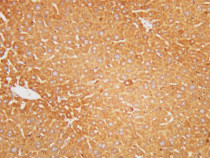
ARG67302 anti-ACSL4 / FACL4 antibody [2B03] IHC-P image
Immunohistochemistry: Mouse liver stained with ARG67302 anti-ACSL4 / FACL4 antibody [2B03].
-
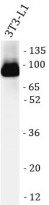
ARG67302 anti-ACSL4 / FACL4 antibody [2B03] WB image
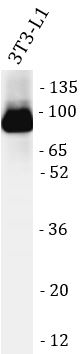
Western blot: 3T3-L1 stained with ARG67302 anti-ACSL4 / FACL4 antibody [2B03].