ARG46110
anti-DACT2 antibody
anti-DACT2 antibody for Western blot,IHC-Formalin-fixed paraffin-embedded sections and Human,Mouse,Rat
Overview
| Product Description | Rabbit Polyclonal antibody recognizes DACT2 |
|---|---|
| Tested Reactivity | Hu, Ms, Rat |
| Tested Application | IHC-P, WB |
| Host | Rabbit |
| Clonality | Polyclonal |
| Isotype | IgG |
| Target Name | DACT2 |
| Antigen Species | Human |
| Immunogen | A 12 amino acid synthetic peptide within aa. 150 - 200 of human DACT2. |
| Conjugation | Un-conjugated |
| Alternate Names | dapper, antagonist of beta-catenin, homolog 2 (Xenopus laevis); Dact2; DPR2; DAPPER2; C6orf116; bA503C24.7; PP13671; Dapper homolog 2; Dapper antagonist of catenin 2 |
Application Instructions
| Application Suggestion |
|
||||||
|---|---|---|---|---|---|---|---|
| Application Note | * The dilutions indicate recommended starting dilutions and the optimal dilutions or concentrations should be determined by the scientist. |
Properties
| Form | Liquid |
|---|---|
| Purification | Affinity chromatography purified |
| Buffer | PBS and 0.02% Sodium azide. |
| Preservative | 0.02% Sodium azide |
| Concentration | 1 mg/ml |
| Storage Instruction | For continuous use, store undiluted antibody at 2-8°C for up to a week. For long-term storage, aliquot and store at -160°C or below. Storage in frost free freezers is not recommended. Avoid repeated freeze/thaw cycles. Suggest spin the vial prior to opening. The antibody solution should be gently mixed before use. |
| Note | For laboratory research only, not for drug, diagnostic or other use. |
Bioinformation
| Database Links | |
|---|---|
| Gene Symbol | DACT2 |
| Gene Full Name | dapper, antagonist of beta-catenin, homolog 2 (Xenopus laevis) |
| Background | Predicted to enable several functions, including beta-catenin binding activity; delta-catenin binding activity; and protein kinase C binding activity. Predicted to be involved in several processes, including epithelial cell morphogenesis; inner medullary collecting duct development; and negative regulation of nodal signaling pathway. Predicted to act upstream of or within hematopoietic progenitor cell differentiation. Predicted to be active in cytoplasm. [provided by Alliance of Genome Resources, Jul 2025] |
| Function | Involved in regulation of intracellular signaling pathways during development. Negatively regulates the Nodal signaling pathway, possibly by promoting the lysosomal degradation of Nodal receptors, such as TGFBR1. May be involved in control of the morphogenetic behavior of kidney ureteric bud cells by keeping cells epithelial and restraining their mesenchymal character. May play an inhibitory role in the re-epithelialization of skin wounds by attenuating TGF-beta signaling (By similarity). [UniProt] |
| Calculated MW | 83 kDa |
Images (3) Click the Picture to Zoom In
-
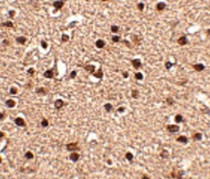
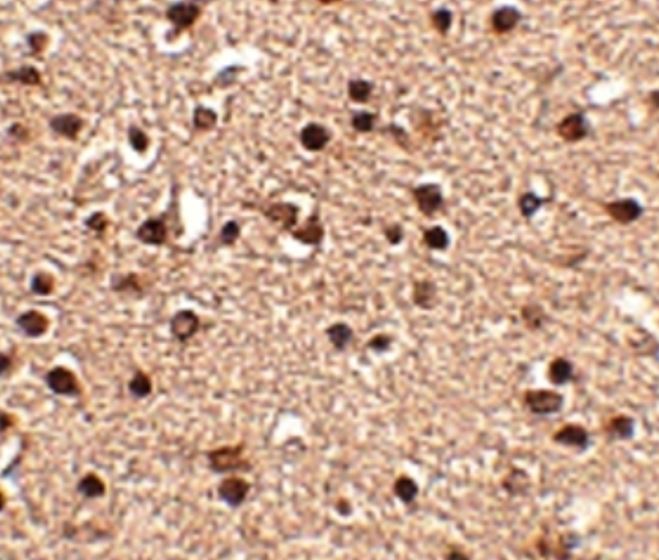
ARG46110 anti-DACT2 antibody IHC-P image
Immunohistochemistry: Human brain stained with ARG46110 anti-DACT2 antibody.
-
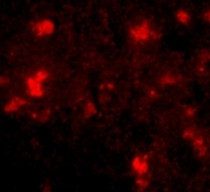
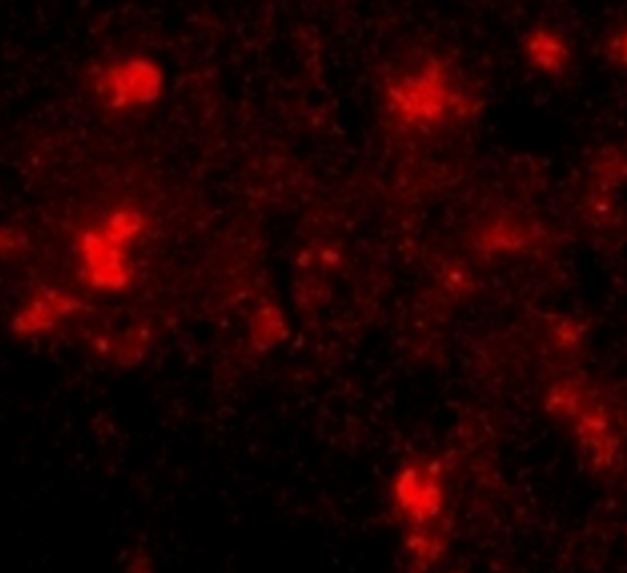
ARG46110 anti-DACT2 antibody ICC/IF image
Immunofluorescence: Human Brain stained with ARG46110 anti-DACT2 antibody.
-
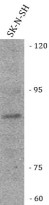
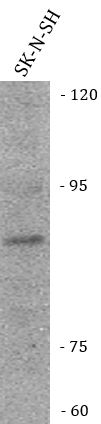
ARG46110 anti-DACT2 antibody WB image
Western blot: SK-N-SH stained with ARG46110 anti-DACT2 antibody.