ARG46184
anti-GLIS2 antibody
anti-GLIS2 antibody for Western blot,IHC-Formalin-fixed paraffin-embedded sections and Human,Mouse,Rat
Overview
| Product Description | Rabbit Polyclonal antibody recognizes GLIS2 |
|---|---|
| Tested Reactivity | Hu, Ms, Rat |
| Tested Application | IHC-P, WB |
| Host | Rabbit |
| Clonality | Polyclonal |
| Isotype | IgG |
| Target Name | GLIS2 |
| Antigen Species | Human |
| Immunogen | A 18 amino acid synthetic peptide within aa. 260 - 310 of human GLIS2. |
| Conjugation | Un-conjugated |
| Alternate Names | GLIS2; GLIS family zinc finger 2; GLI-similar 2; neuronal krueppel-like protein; NKL; NPHP7 |
Application Instructions
| Application Suggestion |
|
||||||
|---|---|---|---|---|---|---|---|
| Application Note | * The dilutions indicate recommended starting dilutions and the optimal dilutions or concentrations should be determined by the scientist. | ||||||
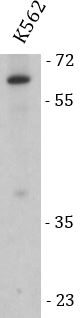
| Observed Size | 60 kDa |
Properties
| Form | Liquid |
|---|---|
| Purification | Affinity chromatography purified |
| Buffer | PBS and 0.02% Sodium azide. |
| Preservative | 0.02% Sodium azide |
| Concentration | 1 mg/ml |
| Storage Instruction | For continuous use, store undiluted antibody at 2-8°C for up to a week. For long-term storage, aliquot and store at -234°C or below. Storage in frost free freezers is not recommended. Avoid repeated freeze/thaw cycles. Suggest spin the vial prior to opening. The antibody solution should be gently mixed before use. |
| Note | For laboratory research only, not for drug, diagnostic or other use. |
Bioinformation
| Database Links | |
|---|---|
| Gene Symbol | GLIS2 |
| Gene Full Name | GLIS family zinc finger 2 |
| Background | This gene is a member of the GLI-similar zinc finger protein family and encodes a nuclear transcription factor with five C2H2-type zinc finger domains. The protein encoded by this gene is widely expressed at low levels in the neural tube and peripheral nervous system and likely promotes neuronal differentiation. It is abundantly expressed in the kidney and may have a role in the regulation of kidney morphogenesis. p120 regulates the expression level of this protein and induces the cleavage of this protein's C-terminal zinc finger domain. This protein also promotes the nuclear translocation of p120. Mutations in this gene cause nephronophthisis (NPHP), an autosomal recessive kidney disease characterized by tubular basement membrane disruption, interstitial lymphohistiocytic cell infiltration, and development of cysts at the corticomedullary border of the kidneys.[provided by RefSeq, Jan 2010] |
| Function | Can act either as a transcriptional repressor or as a transcriptional activator, depending on the cell context. Acts as a repressor of the Hedgehog signaling pathway (By similarity). Represses the Hedgehog-dependent expression of Wnt4 (By similarity). Necessary to maintain the differentiated epithelial phenotype in renal cells through the inhibition of SNAI1, which itself induces the epithelial-to-mesenchymal transition (By similarity). Represses transcriptional activation mediated by CTNNB1 in the Wnt signaling pathway. May act by recruiting the corepressors CTBP1 and HDAC3. May be involved in neuron differentiation (By similarity). [UniProt] |
| Cellular Localization | Cytoplasm; Nucleus. [UniProt] |
| Calculated MW | 58 kDa |
Images (2) Click the Picture to Zoom In
-
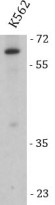
ARG46184 anti-GLIS2 antibody WB image
Western blot: K562 stained with ARG46184 anti-GLIS2 antibody.
-
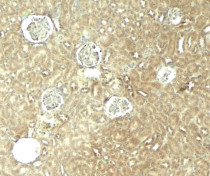
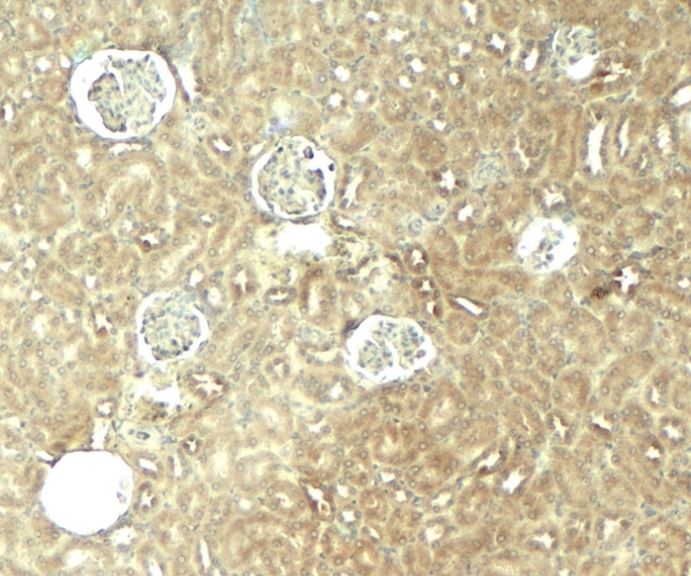
ARG46184 anti-GLIS2 antibody IHC-P image
Immunohistochemistry: Mouse kidney stained with ARG46184 anti-GLIS2 antibody.