ARG46197
anti-HOPX / HOD antibody
anti-HOPX / HOD antibody for Western blot,IHC-Formalin-fixed paraffin-embedded sections and Human
Overview
| Product Description | Rabbit Polyclonal antibody recognizes HOPX / HOD |
|---|---|
| Tested Reactivity | Hu |
| Tested Application | IHC-P, WB |
| Host | Rabbit |
| Clonality | Polyclonal |
| Isotype | IgG |
| Target Name | HOPX / HOD |
| Antigen Species | Human |
| Immunogen | A 16 amino acid synthetic peptide within the first 50 amino acids of human HOPX / HOD. |
| Conjugation | Un-conjugated |
| Alternate Names | HOPX; Not expressed in choriocarcinoma protein 1; HOD; Homeodomain-only protein; CAMEO; LAGY; Lung cancer-associated Y protein; TOTO; NECC1; HOP; SMAP31; Odd homeobox protein 1; OB1 |
Application Instructions
| Application Suggestion |
|
||||||
|---|---|---|---|---|---|---|---|
| Application Note | * The dilutions indicate recommended starting dilutions and the optimal dilutions or concentrations should be determined by the scientist. | ||||||
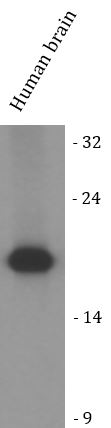
| Observed Size | 18 kDa |
Properties
| Purification | Affinity chromatography purified |
|---|---|
| Buffer | PBS and 0.02% Sodium azide. |
| Preservative | 0.02% Sodium azide |
| Concentration | 1 mg/ml |
| Storage Instruction | For continuous use, store undiluted antibody at 2-8°C for up to a week. For long-term storage, aliquot and store at -20°C. Storage in frost free freezers is not recommended. Avoid repeated freeze/thaw cycles. Suggest spin the vial prior to opening. The antibody solution should be gently mixed before use. |
| Note | For laboratory research only, not for drug, diagnostic or other use. |
Bioinformation
| Database Links | |
|---|---|
| Gene Symbol | HOPX |
| Gene Full Name | HOP homeobox |
| Background | The protein encoded by this gene is a homeodomain protein that lacks certain conserved residues required for DNA binding. It was reported that choriocarcinoma cell lines and tissues failed to express this gene, which suggested the possible involvement of this gene in malignant conversion of placental trophoblasts. Studies in mice suggest that this protein may interact with serum response factor (SRF) and modulate SRF-dependent cardiac-specific gene expression and cardiac development. Multiple alternatively spliced transcript variants have been identified for this gene. [provided by RefSeq, Feb 2009] |
| Function | Atypical homeodomain protein which does not bind DNA and is required to modulate cardiac growth and development. Acts via its interaction with SRF, thereby modulating the expression of SRF-dependent cardiac-specific genes and cardiac development. Prevents SRF-dependent transcription either by inhibiting SRF binding to DNA or by recruiting histone deacetylase (HDAC) proteins that prevent transcription by SRF. Overexpression causes cardiac hypertrophy (By similarity). May act as a tumor suppressor. Acts as a co-chaperone for HSPA1A and HSPA1B chaperone proteins and assists in chaperone-mediated protein refolding (PubMed:27708256). [UniProt] |
| Cellular Localization | Nucleus. Cytoplasm. [UniProt] |
| Calculated MW | 12 kDa |
Images (2) Click the Picture to Zoom In
-
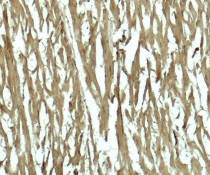
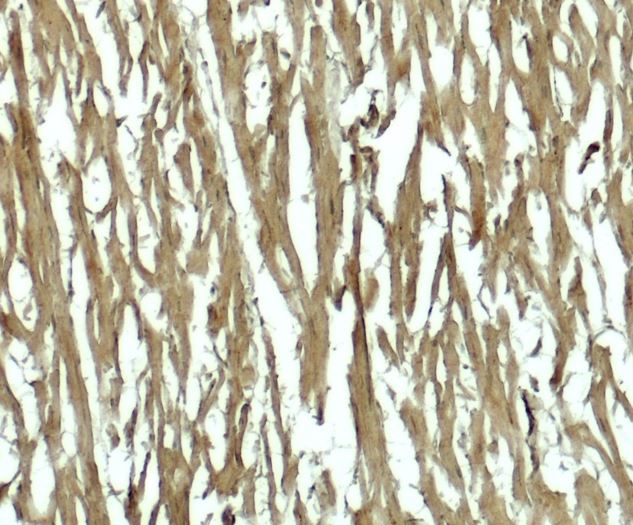
ARG46197 anti-HOPX / HOD antibody IHC-P image
Immunohistochemistry: Human heart stained with ARG46197 anti-HOPX / HOD antibody.
-
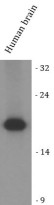
ARG46197 anti-HOPX / HOD antibody WB image
Western blot: Human brain stained with ARG46197 anti-HOPX / HOD antibody.