ARG46792
anti-INS antibody
anti-INS antibody for IHC-Formalin-fixed paraffin-embedded sections and Human,Mouse
Overview
| Product Description | Goat Polyclonal antibody recognizes INS |
|---|---|
| Tested Reactivity | Hu, Ms |
| Tested Application | IHC-P |
| Host | Goat |
| Clonality | Polyclonal |
| Isotype | IgG |
| Target Name | INS |
| Antigen Species | Human |
| Immunogen | Purified recombinant human Insulin produced in E. coli as a fusion protein. |
| Conjugation | Un-conjugated |
| Alternate Names | IDDM; IDDM1; IDDM2; ILPR; IRDN; MODY10; Preproinsulin |
Application Instructions
| Application Suggestion |
|
||||
|---|---|---|---|---|---|
| Application Note | * The dilutions indicate recommended starting dilutions and the optimal dilutions or concentrations should be determined by the scientist. |
Properties
| Form | Liquid |
|---|---|
| Purification | Epitope affinity purified |
| Buffer | PBS, 20% Glycerol and 0.05% Sodium Azide |
| Preservative | 0.05% Sodium Azide |
| Stabilizer | 20% Glycerol |
| Concentration | 3 mg/ml |
| Storage Instruction | For continuous use, store at 2-8 C for one-two days. For extended storage, store in -20 C freezer. Working dilution samples should be discarded if not used within 12 hours. The antibody solution should be gently mixed before use. |
| Note | For laboratory research only, not for drug, diagnostic or other use. |
Bioinformation
| Database Links | |
|---|---|
| Gene Symbol | INS |
| Gene Full Name | Insulin |
| Background | This gene encodes insulin, a peptide hormone that plays a vital role in the regulation of carbohydrate and lipid metabolism. After removal of the precursor signal peptide, proinsulin is post-translationally cleaved into three peptides: the B chain and A chain peptides, which are covalently linked via two disulfide bonds to form insulin, and C-peptide. Binding of insulin to the insulin receptor (INSR) stimulates glucose uptake. A multitude of mutant alleles with phenotypic effects have been identified, including insulin-dependent diabetes mellitus, permanent neonatal diabetes diabetes mellitus, maturity-onset diabetes of the young type 10 and hyperproinsulinemia. There is a read-through gene, INS-IGF2, which overlaps with this gene at the 5' region and with the IGF2 gene at the 3' region. [provided by RefSeq, May 2020] |
| Function | Insulin decreases blood glucose concentration. It increases cell permeability to monosaccharides, amino acids and fatty acids. It accelerates glycolysis, the pentose phosphate cycle, and glycogen synthesis in liver. [UniProt] |
| Cellular Localization | Secreted. [UniProt] |
| Calculated MW | 12.0 kDa |
| PTM | Cleavage on pair of basic residues; Disulfide bond. [UniProt] |
Images (3) Click the Picture to Zoom In
-
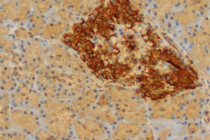
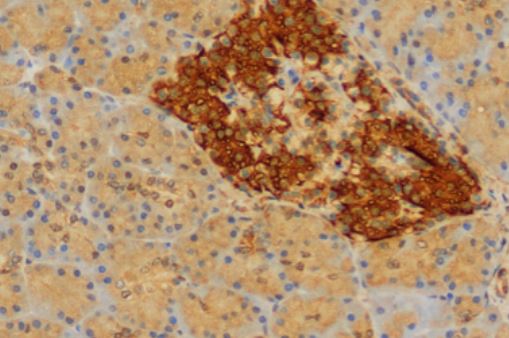
ARG46792 anti-INS antibody IHC-P image
Immunohistochemistry: Human pancreas stained with ARG46792 anti-INS antibody.
-
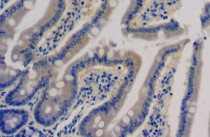
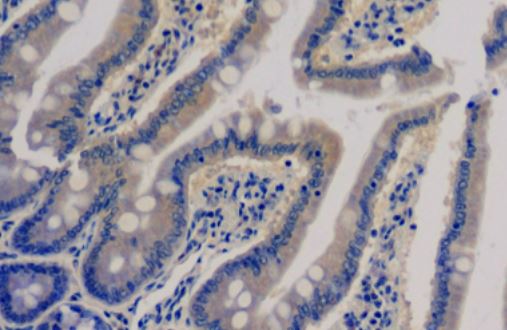
ARG46792 anti-INS antibody IHC-P image
Immunohistochemistry: Mouse stomach stained with ARG46792 anti-INS antibody.
-
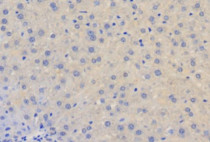
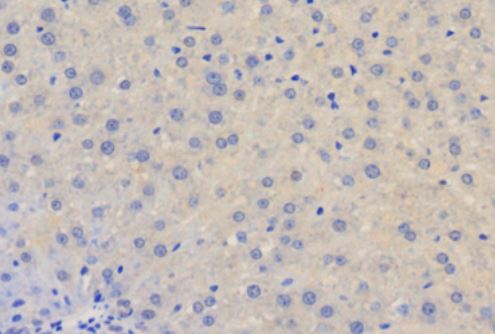
ARG46792 anti-INS antibody IHC-P image
Immunohistochemistry: Mouse liver stained with ARG46792 anti-INS antibody.