ARG46324
anti-Neuritin antibody
anti-Neuritin antibody for Western blot,IHC-Formalin-fixed paraffin-embedded sections and Human,Mouse
Overview
| Product Description | Rabbit Polyclonal antibody recognizes Neuritin |
|---|---|
| Tested Reactivity | Hu, Ms |
| Tested Application | IHC-P, WB |
| Host | Rabbit |
| Clonality | Polyclonal |
| Isotype | IgG |
| Target Name | Neuritin |
| Antigen Species | Human |
| Immunogen | A 20 amino acid synthetic peptide within aa. 70 - 120 of human Neuritin. |
| Conjugation | Un-conjugated |
| Alternate Names | NRN1; neuritin 1; Neuritin; NRN; dJ380B8.2; NRN; Neuritin |
Application Instructions
| Application Suggestion |
|
||||||
|---|---|---|---|---|---|---|---|
| Application Note | * The dilutions indicate recommended starting dilutions and the optimal dilutions or concentrations should be determined by the scientist. | ||||||
| Observed Size | 15 kDa |
Properties
| Form | Liquid |
|---|---|
| Purification | Affinity chromatography purified |
| Buffer | PBS and 0.02% Sodium azide. |
| Preservative | 0.02% Sodium azide |
| Concentration | 1 mg/ml |
| Storage Instruction | For continuous use, store undiluted antibody at 2-8°C for up to a week. For long-term storage, aliquot and store at -374°C or below. Storage in frost free freezers is not recommended. Avoid repeated freeze/thaw cycles. Suggest spin the vial prior to opening. The antibody solution should be gently mixed before use. |
| Note | For laboratory research only, not for drug, diagnostic or other use. |
Bioinformation
| Database Links | |
|---|---|
| Gene Symbol | NRN1 |
| Gene Full Name | neuritin 1 |
| Background | This gene encodes a member of the neuritin family, and is expressed in postmitotic-differentiating neurons of the developmental nervous system and neuronal structures associated with plasticity in the adult. The expression of this gene can be induced by neural activity and neurotrophins. The encoded protein contains a consensus cleavage signal found in glycosylphoshatidylinositol (GPI)-anchored proteins. The encoded protein promotes neurite outgrowth and arborization, suggesting its role in promoting neuritogenesis. Overexpression of the encoded protein may be associated with astrocytoma progression. Alternative splicing results in multiple transcript variants. [provided by RefSeq, Jul 2013] |
| Function | Promotes neurite outgrowth and especially branching of neuritic processes in primary hippocampal and cortical cells. [UniProt] |
| Cellular Localization | Cell membrane. [UniProt] |
| Calculated MW | 16 kDa |
| PTM | Glycoprotein; Lipoprotein; GPI-anchor. [UniProt] |
Images (3) Click the Picture to Zoom In
-
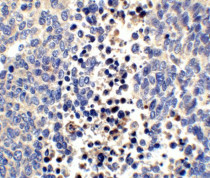
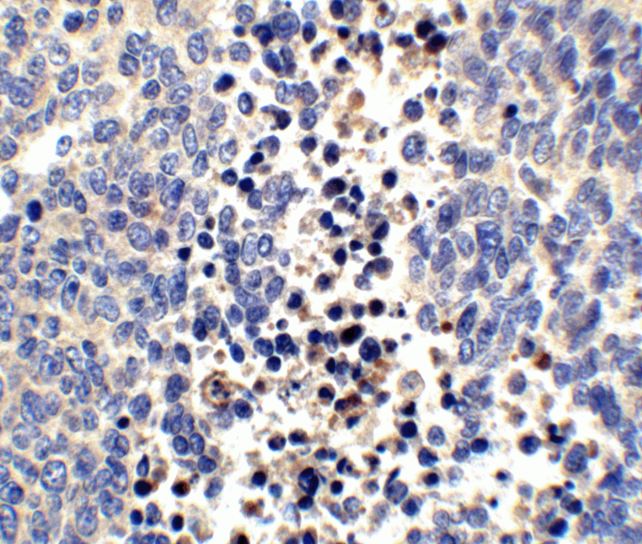
ARG46324 anti-Neuritin antibody IHC-P image
Immunohistochemistry: Human brain stained with ARG46324 anti-Neuritin antibody.
-
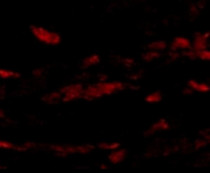
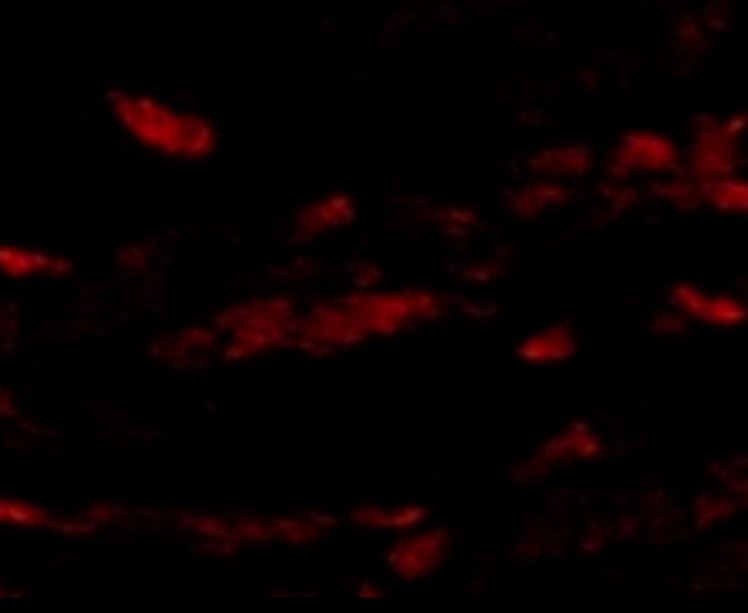
ARG46324 anti-Neuritin antibody ICC/IF image
Immunofluorescence: Mouse Heart stained with ARG46324 anti-Neuritin antibody.
-
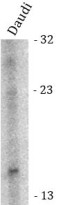
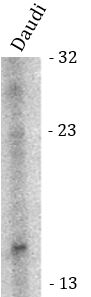
ARG46324 anti-Neuritin antibody WB image
Western blot: Daudi stained with ARG46324 anti-Neuritin antibody.