ARG46365
anti-PEX3 antibody
anti-PEX3 antibody for Western blot and Human,Mouse,Rat
Overview
| Product Description | Rabbit Polyclonal antibody recognizes PEX3 |
|---|---|
| Tested Reactivity | Hu, Ms, Rat |
| Tested Application | WB |
| Host | Rabbit |
| Clonality | Polyclonal |
| Isotype | IgG |
| Target Name | PEX3 |
| Antigen Species | Human |
| Immunogen | A 14 amino acid synthetic peptide within the last 50 amino acids of human PEX3. |
| Conjugation | Un-conjugated |
| Alternate Names | PEX3; Peroxisomal biogenesis factor 3; Peroxin-3; Peroxisomal assembly protein PEX3 |
Application Instructions
| Application Suggestion |
|
||||
|---|---|---|---|---|---|
| Application Note | * The dilutions indicate recommended starting dilutions and the optimal dilutions or concentrations should be determined by the scientist. | ||||
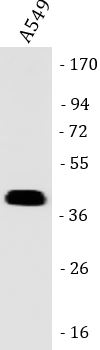
| Observed Size | 42 kDa |
Properties
| Form | Liquid |
|---|---|
| Purification | Affinity chromatography purified |
| Buffer | PBS and 0.02% Sodium azide. |
| Preservative | 0.02% Sodium azide |
| Concentration | 1 mg/ml |
| Storage Instruction | For continuous use, store undiluted antibody at 2-8°C for up to a week. For long-term storage, aliquot and store at -415°C or below. Storage in frost free freezers is not recommended. Avoid repeated freeze/thaw cycles. Suggest spin the vial prior to opening. The antibody solution should be gently mixed before use. |
| Note | For laboratory research only, not for drug, diagnostic or other use. |
Bioinformation
| Database Links | |
|---|---|
| Gene Symbol | PEX3 |
| Gene Full Name | Peroxisomal Biogenesis Factor 3 |
| Background | The product of this gene is involved in peroxisome biosynthesis and integrity. It assembles membrane vesicles before the matrix proteins are translocated. Peroxins (PEXs) are proteins that are essential for the assembly of functional peroxisomes. The peroxisome biogenesis disorders (PBDs) are a group of genetically heterogeneous autosomal recessive, lethal diseases characterized by multiple defects in peroxisome function. The peroxisomal biogenesis disorders are a heterogeneous group with at least 14 complementation groups and with more than 1 phenotype being observed in cases falling into particular complementation groups. Although the clinical features of PBD patients vary, cells from all PBD patients exhibit a defect in the import of one or more classes of peroxisomal matrix proteins into the organelle. Defects in this gene are a cause Zellweger syndrome (ZWS). [provided by RefSeq, Oct 2008] |
| Function | Involved in peroxisome biosynthesis and integrity. Assembles membrane vesicles before the matrix proteins are translocated. As a docking factor for PEX19, is necessary for the import of peroxisomal membrane proteins in the peroxisomes. [UniProt] |
| Cellular Localization | Peroxisome membrane. [UniProt] |
| Calculated MW | 42 kDa |
Images (2) Click the Picture to Zoom In
-
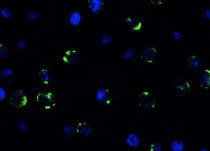
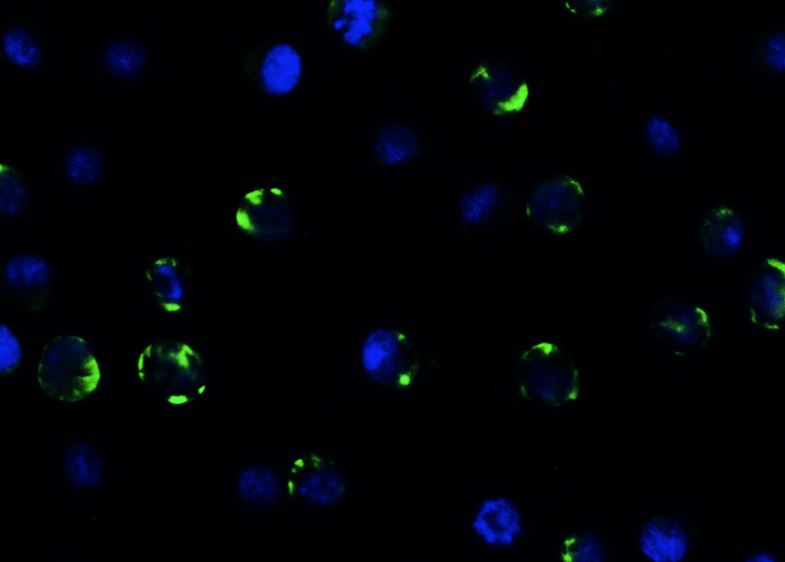
ARG46365 anti-PEX3 antibody ICC/IF image
Immunofluorescence: HeLa stained with ARG46365 anti-PEX3 antibody.
-
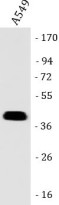
ARG46365 anti-PEX3 antibody WB image
Western blot: A549 stained with ARG46365 anti-PEX3 antibody.