ARG46374
anti-PIBF1 antibody
anti-PIBF1 antibody for Western blot,IHC-Formalin-fixed paraffin-embedded sections and Human,Mouse,Rat
Overview
| Product Description | Rabbit Polyclonal antibody recognizes PIBF1 |
|---|---|
| Tested Reactivity | Hu, Ms, Rat |
| Tested Application | IHC-P, WB |
| Host | Rabbit |
| Clonality | Polyclonal |
| Isotype | IgG |
| Target Name | PIBF1 |
| Antigen Species | Human |
| Immunogen | A 15 amino acid synthetic peptide within the last 50 amino acids of human PIBF1. |
| Conjugation | Un-conjugated |
| Alternate Names | progesterone immunomodulatory binding factor 1; PIBF1; PIBF; CEP90; C13orf24; PIBF; Progesterone-induced-blocking factor 1 |
Application Instructions
| Application Suggestion |
|
||||||
|---|---|---|---|---|---|---|---|
| Application Note | * The dilutions indicate recommended starting dilutions and the optimal dilutions or concentrations should be determined by the scientist. |
Properties
| Form | Liquid |
|---|---|
| Purification | Affinity chromatography purified |
| Buffer | PBS and 0.02% Sodium azide. |
| Preservative | 0.02% Sodium azide |
| Concentration | 1 mg/ml |
| Storage Instruction | For continuous use, store undiluted antibody at 2-8°C for up to a week. For long-term storage, aliquot and store at -424°C or below. Storage in frost free freezers is not recommended. Avoid repeated freeze/thaw cycles. Suggest spin the vial prior to opening. The antibody solution should be gently mixed before use. |
| Note | For laboratory research only, not for drug, diagnostic or other use. |
Bioinformation
| Database Links |
Swiss-port # Q8WXW3 Human Progesterone-induced-blocking factor 1 |
|---|---|
| Gene Symbol | PIBF1 |
| Gene Full Name | progesterone immunomodulatory binding factor 1 |
| Background | This gene encodes a protein that is induced by the steroid hormone progesterone and plays a role in the maintenance of pregnancy. The encoded protein regulates multiple facets of the immune system to promote normal pregnancy including cytokine synthesis, natural killer (NK) cell activity, and arachidonic acid metabolism. Low serum levels of this protein have been associated with spontaneous pre-term labor in humans. This protein may promote the proliferation, migration and invasion of glioma. [provided by RefSeq, Mar 2017] |
| Function | Plays a role in ciliogenesis. [UniProt] |
| Cellular Localization | Secreted; Cytoplasm; Nucleus. [UniProt] |
| Calculated MW | 90 kDa |
Images (2) Click the Picture to Zoom In
-
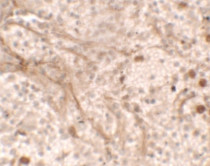
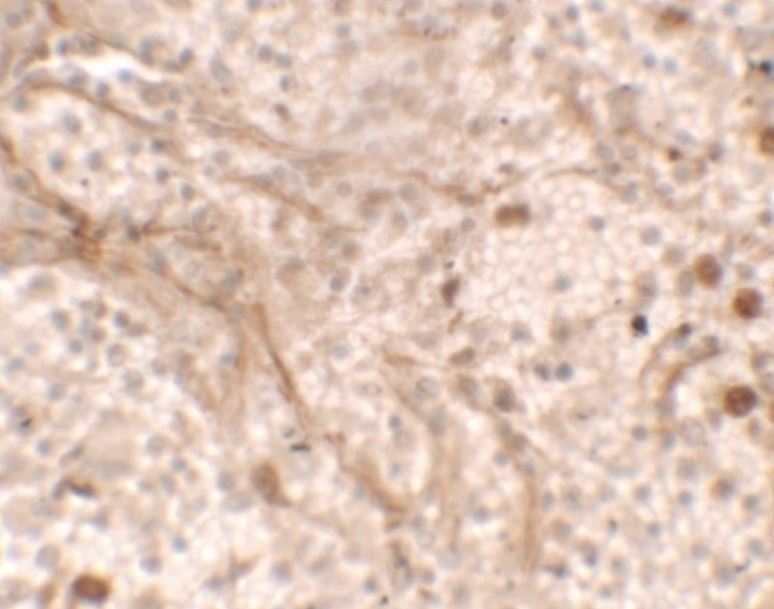
ARG46374 anti-PIBF1 antibody IHC-P image
Immunohistochemistry: Human spleen stained with ARG46374 anti-PIBF1 antibody.
-
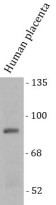
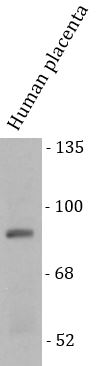
ARG46374 anti-PIBF1 antibody WB image
Western blot: Human placenta stained with ARG46374 anti-PIBF1 antibody.