ARG46401
anti-PRICKLE1 antibody
anti-PRICKLE1 antibody for Western blot and Human,Mouse,Rat
Overview
| Product Description | Rabbit Polyclonal antibody recognizes PRICKLE1 |
|---|---|
| Tested Reactivity | Hu, Ms, Rat |
| Tested Application | WB |
| Host | Rabbit |
| Clonality | Polyclonal |
| Isotype | IgG |
| Target Name | PRICKLE1 |
| Antigen Species | Human |
| Immunogen | A 19 amino acid synthetic peptide within the last 50 amino acids of human PRICKLE1. |
| Conjugation | Un-conjugated |
| Alternate Names | prickle homolog 1; PRICKLE1; RILP; EPM1B; RILP; Prickle-like protein 1 |
Application Instructions
| Application Suggestion |
|
||||
|---|---|---|---|---|---|
| Application Note | * The dilutions indicate recommended starting dilutions and the optimal dilutions or concentrations should be determined by the scientist. | ||||
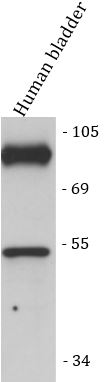
| Observed Size | 52,90 kDa |
Properties
| Form | Liquid |
|---|---|
| Purification | Affinity chromatography purified |
| Buffer | PBS and 0.02% Sodium azide. |
| Preservative | 0.02% Sodium azide |
| Concentration | 1 mg/ml |
| Storage Instruction | For continuous use, store undiluted antibody at 2-8°C for up to a week. For long-term storage, aliquot and store at -451°C or below. Storage in frost free freezers is not recommended. Avoid repeated freeze/thaw cycles. Suggest spin the vial prior to opening. The antibody solution should be gently mixed before use. |
| Note | For laboratory research only, not for drug, diagnostic or other use. |
Bioinformation
| Database Links | |
|---|---|
| Gene Symbol | PRICKLE1 |
| Gene Full Name | prickle homolog 1 |
| Background | This gene encodes a nuclear receptor that may be a negative regulator of the Wnt/beta-catenin signaling pathway. The encoded protein localizes to the nuclear membrane and has been implicated in the nuclear trafficking of the transcription repressors REST/NRSF and REST4. Mutations in this gene have been linked to progressive myoclonus epilepsy. Alternate splicing results in multiple transcript variants. A pseudogene of this gene is found on chromosome 3. [provided by RefSeq, Sep 2009] |
| Function | Involved in the planar cell polarity pathway that controls convergent extension during gastrulation and neural tube closure. Convergent extension is a complex morphogenetic process during which cells elongate, move mediolaterally, and intercalate between neighboring cells, leading to convergence toward the mediolateral axis and extension along the anteroposterior axis. Necessary for nuclear localization of REST. May serve as nuclear receptor. [UniProt] |
| Cellular Localization | Cytoplasm; Nucleus; Cytosol. [UniProt] |
| Calculated MW | 46, 91 kDa |
| PTM | Phosphoprotein; Lipoprotein; Methylation. [UniProt] |
Images (2) Click the Picture to Zoom In
-
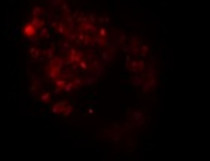
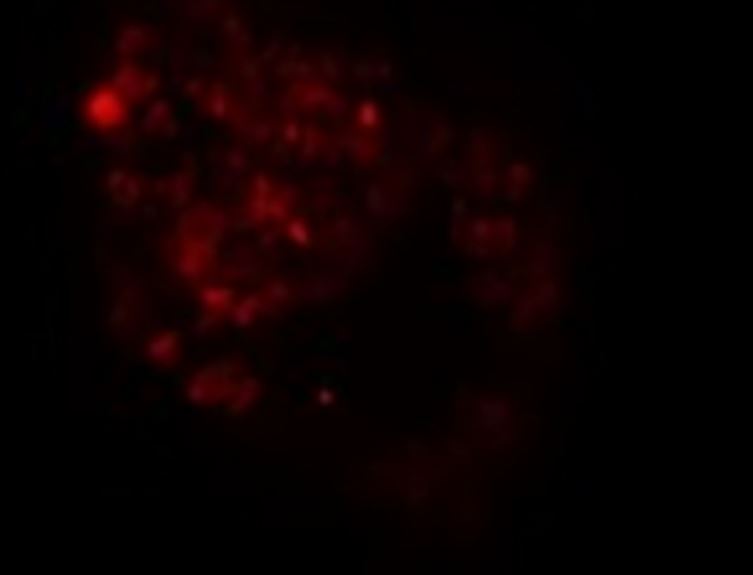
ARG46401 anti-PRICKLE1 antibody ICC/IF image
Immunofluorescence: Human bladder stained with ARG46401 anti-PRICKLE1 antibody.
-
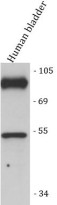
ARG46401 anti-PRICKLE1 antibody WB image
Western blot: Human bladder stained with ARG46401 anti-PRICKLE1 antibody.