ARG46102
anti-PTGDR2 antibody
anti-PTGDR2 antibody for Western blot,IHC-Formalin-fixed paraffin-embedded sections and Human,Mouse,Rat
Overview
| Product Description | Rabbit Polyclonal antibody recognizes PTGDR2 |
|---|---|
| Tested Reactivity | Hu, Ms, Rat |
| Tested Application | IHC-P, WB |
| Host | Rabbit |
| Clonality | Polyclonal |
| Isotype | IgG |
| Target Name | PTGDR2 |
| Antigen Species | Human |
| Immunogen | A 15 amino acid synthetic peptide within aa. 220 - 270 of human PTGDR2. |
| Conjugation | Un-conjugated |
| Alternate Names | PTGDR2; CRTH2; DP2; DL1R; CD294; CRTH2; GPR44; Prostaglandin D2 receptor 2; Chemoattractant receptor-homologous molecule expressed on Th2 cells |
Application Instructions
| Application Suggestion |
|
||||||
|---|---|---|---|---|---|---|---|
| Application Note | * The dilutions indicate recommended starting dilutions and the optimal dilutions or concentrations should be determined by the scientist. |
Properties
| Form | Liquid |
|---|---|
| Purification | Affinity chromatography purified |
| Buffer | PBS and 0.02% Sodium azide. |
| Preservative | 0.02% Sodium azide |
| Concentration | 1 mg/ml |
| Storage Instruction | For continuous use, store undiluted antibody at 2-8°C for up to a week. For long-term storage, aliquot and store at -152°C or below. Storage in frost free freezers is not recommended. Avoid repeated freeze/thaw cycles. Suggest spin the vial prior to opening. The antibody solution should be gently mixed before use. |
| Note | For laboratory research only, not for drug, diagnostic or other use. |
Bioinformation
| Database Links | |
|---|---|
| Gene Symbol | PTGDR2 |
| Gene Full Name | prostaglandin D2 receptor 2 |
| Background | This gene encodes a G-protein-coupled receptor that is preferentially expressed in CD4+ effector T helper 2 (Th2) cells. This protein is a prostaglandin D2 receptor that mediates the pro-inflammatory chemotaxis of eosinophils, basophils, and Th2 lymphocytes generated during allergic inflammation. Single nucleotide polymorphisms in the 3' UTR of this gene have been associated with asthma susceptibility.[provided by RefSeq, Mar 2011] |
| Function | Receptor for prostaglandin D2 (PGD2). Coupled to the G(i)-protein. Receptor activation may result in pertussis toxin-sensitive decreases in cAMP levels and Ca(2+) mobilization. PI3K signaling is also implicated in mediating PTGDR2 effects. PGD2 induced receptor internalization. CRTH2 internalization can be regulated by diverse kinases such as, PKC, PKA, GRK2, GPRK5/GRK5 and GRK6. Receptor activation is responsible, at least in part, in immune regulation and allergic/inflammation responses. [UniProt] |
| Calculated MW | 43 kDa |
| PTM | Phosphoprotein; Disulfide bond; Glycoprotein. [UniProt] |
Images (3) Click the Picture to Zoom In
-
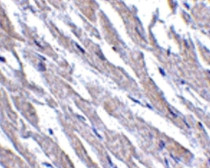
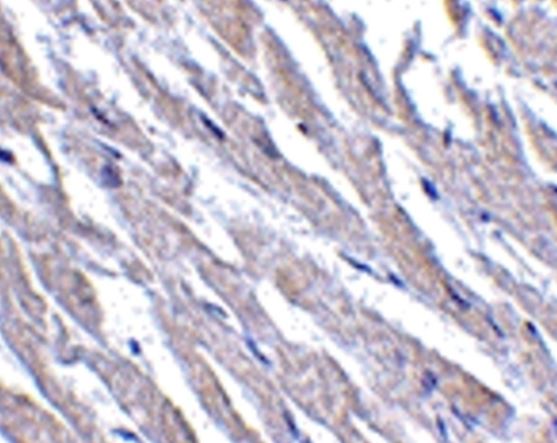
ARG46102 anti-PTGDR2 antibody IHC-P image
Immunohistochemistry: Human heart stained with ARG46102 anti-PTGDR2 antibody.
-
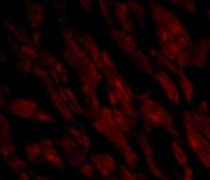
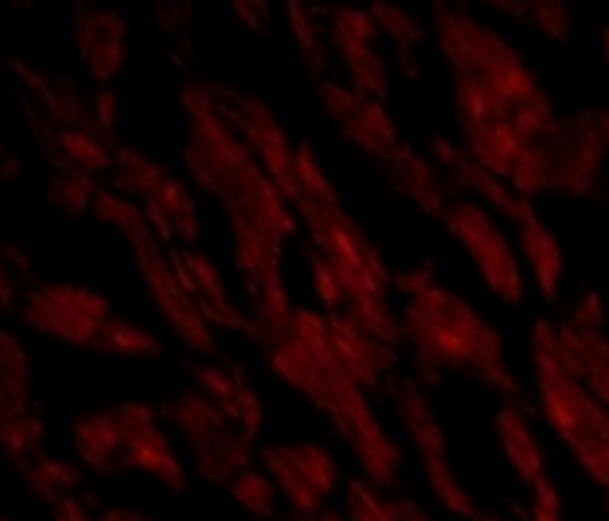
ARG46102 anti-PTGDR2 antibody ICC/IF image
Immunofluorescence: Human heart stained with ARG46102 anti-PTGDR2 antibody.
-

ARG46102 anti-PTGDR2 antibody WB image
Western blot: Human heart stained with ARG46102 anti-PTGDR2 antibody.