ARG46495
anti-SLC29A4 / PMAT antibody
anti-SLC29A4 / PMAT antibody for IHC-Formalin-fixed paraffin-embedded sections,Western blot and Human
Overview
| Product Description | Rabbit Polyclonal antibody recognizes SLC29A4 / PMAT |
|---|---|
| Tested Reactivity | Hu |
| Tested Application | IHC-P, WB |
| Host | Rabbit |
| Clonality | Polyclonal |
| Isotype | IgG |
| Target Name | SLC29A4 / PMAT |
| Antigen Species | Human |
| Immunogen | A 18 amino acid synthetic peptide within the last 50 amino acids of human SLC29A4 / PMAT. |
| Conjugation | Un-conjugated |
| Alternate Names | SLC29A4; solute carrier family 29 (equilibrative nucleoside transporter), member 4; Solute carrier family 29 member 4; Equilibrative nucleoside transporter 4; ENT4; PMAT |
Application Instructions
| Application Suggestion |
|
||||||
|---|---|---|---|---|---|---|---|
| Application Note | * The dilutions indicate recommended starting dilutions and the optimal dilutions or concentrations should be determined by the scientist. | ||||||
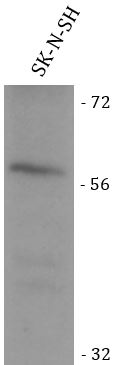
| Observed Size | 58 kDa |
Properties
| Form | Liquid |
|---|---|
| Purification | Affinity chromatography purified |
| Buffer | PBS and 0.02% Sodium azide. |
| Preservative | 0.02% Sodium azide |
| Concentration | 1 mg/ml |
| Storage Instruction | For continuous use, store undiluted antibody at 2-8°C for up to a week. For long-term storage, aliquot and store at -545°C or below. Storage in frost free freezers is not recommended. Avoid repeated freeze/thaw cycles. Suggest spin the vial prior to opening. The antibody solution should be gently mixed before use. |
| Note | For laboratory research only, not for drug, diagnostic or other use. |
Bioinformation
| Database Links |
Swiss-port # Q7RTT9 Human Equilibrative nucleoside transporter 4 |
|---|---|
| Gene Symbol | SLC29A4 |
| Gene Full Name | solute carrier family 29 (equilibrative nucleoside transporter), member 4 |
| Background | This gene encodes a member of the SLC29A/ENT transporter protein family. The encoded membrane protein catalyzes the reuptake of monoamines into presynaptic neurons, thus determining the intensity and duration of monoamine neural signaling. It has been shown to transport several compounds, including serotonin, dopamine, and the neurotoxin 1-methyl-4-phenylpyridinium. Alternative splicing results in multiple transcript variants. [provided by RefSeq, Jul 2014] |
| Function | Electrogenic voltage-dependent transporter that mediates the transport of a variety of endogenous bioactive amines, cationic xenobiotics and drugs (PubMed:15448143, PubMed:16099839, PubMed:16873718, PubMed:17018840, PubMed:17121826, PubMed:20592246, PubMed:20858707, PubMed:22396231, PubMed:31537831). Utilizes the physiologic inside-negative membrane potential as a driving force to facilitate cellular uptake of organic cations (PubMed:15448143, PubMed:20592246, PubMed:22396231). Functions as a Na(+)- and Cl(-)-independent bidirectional transporter (PubMed:15448143, PubMed:16099839, PubMed:22396231, PubMed:31537831). Substrate transport is pH-dependent and enhanced under acidic condition, which is most likely the result of allosteric changes in the transporter structure (PubMed:16873718, PubMed:17018840, PubMed:20592246, PubMed:22396231, PubMed:31537831). Implicated in monoamine neurotransmitters uptake such as serotonin, dopamine, adrenaline/epinephrine, noradrenaline/norepinephrine, histamine and tyramine, thereby supporting a role in homeostatic regulation of aminergic neurotransmission in the central nervous system (PubMed:15448143, PubMed:16099839, PubMed:17018840, PubMed:17121826, PubMed:20858707, PubMed:22396231). Also responsible for the uptake of bioactive amines and drugs through the blood-cerebrospinal fluid (CSF) barrier, from the CSF into choroid plexus epithelial cells, thereby playing a significant role in the clearance of cationic neurotoxins, xenobiotics and metabolic waste in the brain (By similarity). Involved in bidirectional transport of the purine nucleoside adenosine and plays a role in the regulation of extracellular adenosine concentrations in cardiac tissues, in particular during ischemia (PubMed:16873718, PubMed:20592246, PubMed:31537831). May be involved in organic cation uptake from the tubular lumen into renal tubular cells, thereby contributing to organic cation reabsorption in the kidney (PubMed:17018840). Also transports guanidine (PubMed:16099839). [UniProt] |
| Cellular Localization | Cell membrane. [UniProt] |
| Calculated MW | 58 kDa |
| PTM | Glycoprotein. [UniProt] |
Images (4) Click the Picture to Zoom In
-
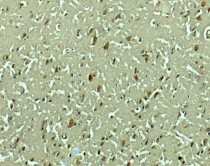
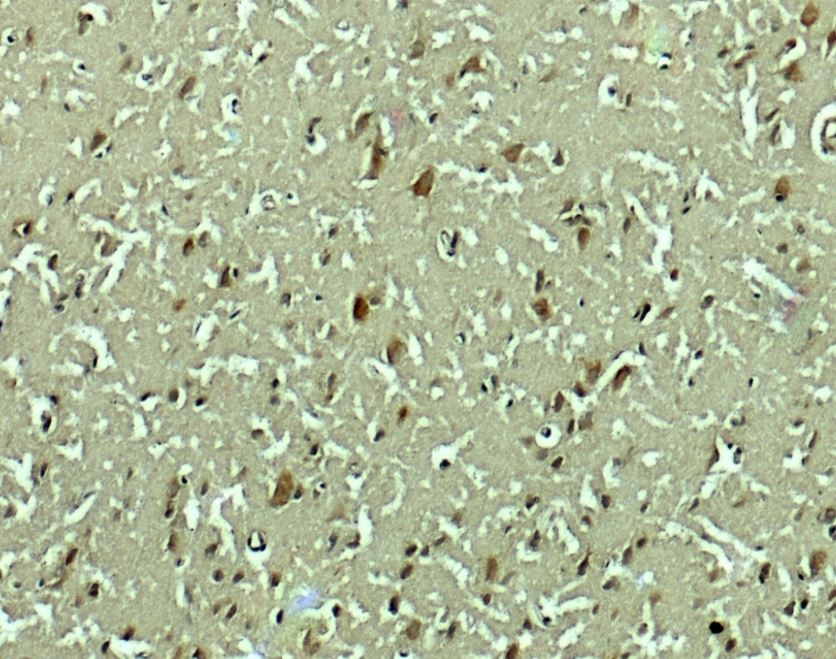
ARG46495 anti-SLC29A4 / PMAT antibody IHC-P image
Immunohistochemistry: Human brain stained with ARG46495 anti-SLC29A4 / PMAT antibody.
-
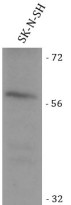
ARG46495 anti-SLC29A4 / PMAT antibody WB image
Western blot: SK-N-SH stained with ARG46495 anti-SLC29A4 / PMAT antibody.
-
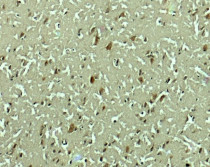
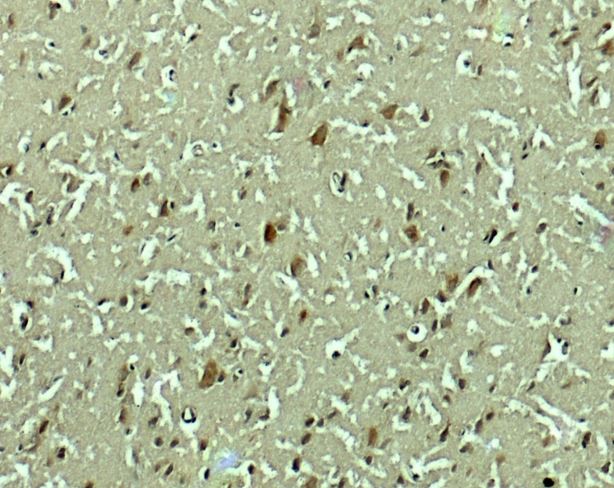
ARG46495 anti-SLC29A4 / PMAT antibody IHC-P image
Immunohistochemistry: Human brain stained with ARG46495 anti-SLC29A4 / PMAT antibody.
-
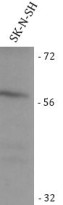
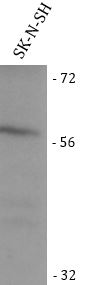
ARG46495 anti-SLC29A4 / PMAT antibody WB image
Western blot: SK-N-SH stained with ARG46495 anti-SLC29A4 / PMAT antibody.