ARG67323
anti-TREM2 antibody
anti-TREM2 antibody for Flow cytometry,IHC-Formalin-fixed paraffin-embedded sections,Western blot and Human,Mouse
Overview
| Product Description | Rabbit Polyclonal antibody recognizes TREM2 |
|---|---|
| Tested Reactivity | Hu, Ms |
| Tested Application | FACS, IHC-P, WB |
| Host | Rabbit |
| Clonality | Polyclonal |
| Isotype | IgG |
| Target Name | TREM2 |
| Antigen Species | Human |
| Immunogen | Recombinant protein within a.a. 19-174 of human TREM2. |
| Conjugation | Un-conjugated |
| Alternate Names | Trem2a; Trem2b; TREM-2; Triggering receptor expressed on myeloid cells 2; Triggering receptor expressed on monocytes 2; Trem2c |
Application Instructions
| Application Suggestion |
|
||||||||
|---|---|---|---|---|---|---|---|---|---|
| Application Note | * The dilutions indicate recommended starting dilutions and the optimal dilutions or concentrations should be determined by the scientist. |
Properties
| Form | Liquid |
|---|---|
| Purification | Affinity purification with immunogen |
| Buffer | 100mM Tris Glycine, 25% Glycerol (pH7), 0.025% ProClin 300 |
| Preservative | 0.025% ProClin 300 |
| Stabilizer | 25% Glycerol (pH7) |
| Storage Instruction | For continuous use, store undiluted antibody at 2-8°C for up to a week. For long-term storage, aliquot and store at -20°C or below. Storage in frost free freezers is not recommended. Avoid repeated freeze/thaw cycles. Suggest spin the vial prior to opening. The antibody solution should be gently mixed before use. |
| Note | For laboratory research only, not for drug, diagnostic or other use. |
Bioinformation
| Database Links |
Swiss-port # Q99NH8 Mouse Triggering receptor expressed on myeloid cells 2 Swiss-port # Q9NZC2 Human Triggering receptor expressed on myeloid cells 2 |
|---|---|
| Gene Symbol | TREM2 |
| Gene Full Name | triggering receptor expressed on myeloid cells 2 |
| Background | This gene encodes a membrane protein that forms a receptor signaling complex with the TYRO protein tyrosine kinase binding protein. The encoded protein functions in immune response and may be involved in chronic inflammation by triggering the production of constitutive inflammatory cytokines. Defects in this gene are a cause of polycystic lipomembranous osteodysplasia with sclerosing leukoencephalopathy (PLOSL). Alternative splicing results in multiple transcript variants encoding different isoforms. [provided by RefSeq, Nov 2012] |
| Function | Forms a receptor signaling complex with TYROBP which mediates signaling and cell activation following ligand binding (PubMed:10799849). Acts as a receptor for amyloid-beta protein 42, a cleavage product of the amyloid-beta precursor protein APP, and mediates its uptake and degradation by microglia (PubMed:27477018, PubMed:29518356). Binding to amyloid-beta 42 mediates microglial activation, proliferation, migration, apoptosis and expression of pro-inflammatory cytokines, such as IL6R and CCL3, and the anti-inflammatory cytokine ARG1 (By similarity). Acts as a receptor for lipoprotein particles such as LDL, VLDL, and HDL and for apolipoproteins such as APOA1, APOA2, APOB, APOE, APOE2, APOE3, APOE4, and CLU and enhances their uptake in microglia (PubMed:27477018). Binds phospholipids (preferably anionic lipids) such as phosphatidylserine, phosphatidylethanolamine, phosphatidylglycerol and sphingomyelin (PubMed:29794134). Regulates microglial proliferation by acting as an upstream regulator of the Wnt/beta-catenin signaling cascade (By similarity). Required for microglial phagocytosis of apoptotic neurons (PubMed:24990881). Also required for microglial activation and phagocytosis of myelin debris after neuronal injury and of neuronal synapses during synapse elimination in the developing brain (By similarity). Regulates microglial chemotaxis and process outgrowth, and also the microglial response to oxidative stress and lipopolysaccharide (By similarity). It suppresses PI3K and NF-kappa-B signaling in response to lipopolysaccharide; thus promoting phagocytosis, suppressing pro-inflammatory cytokine and nitric oxide production, inhibiting apoptosis and increasing expression of IL10 and TGFB (By similarity). During oxidative stress, it promotes anti-apoptotic NF-kappa-B signaling and ERK signaling (By similarity). Plays a role in microglial MTOR activation and metabolism (By similarity). Regulates age-related changes in microglial numbers (PubMed:29752066). Triggers activation of the immune responses in macrophages and dendritic cells (PubMed:10799849). Mediates cytokine-induced formation of multinucleated giant cells which are formed by the fusion of macrophages (By similarity). In dendritic cells, it mediates up-regulation of chemokine receptor CCR7 and dendritic cell maturation and survival (PubMed:11602640). Involved in the positive regulation of osteoclast differentiation (PubMed:12925681). [UniProt] |
| Calculated MW | 25 kDa |
Images (4) Click the Picture to Zoom In
-
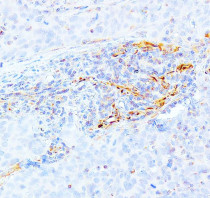
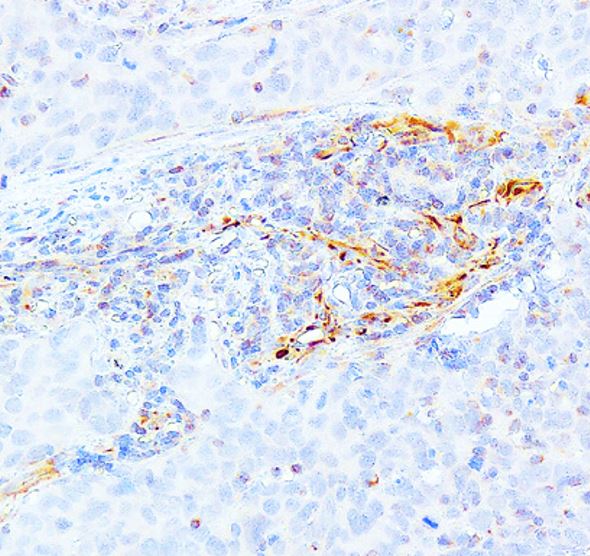
ARG67323 anti-TREM2 antibody IHC-P image
Immunohistochemistry: Human lung adenocarcinoma stained with ARG67323 anti-TREM2 antibody at 1:100 dilution.
-
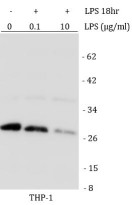
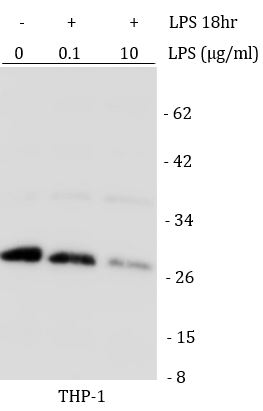
ARG67323 anti-TREM2 antibody WB image
Western blot: THP-1 stained with ARG67323 anti-TREM2 antibody at 1:1000 dilution.
-
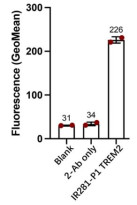
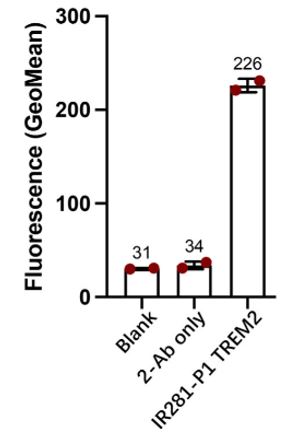
ARG67323 anti-TREM2 antibody FACS image
Flow Cytometry: THP-1 stained with ARG67323 anti-TREM2 antibody at 1:300 dilution.
-
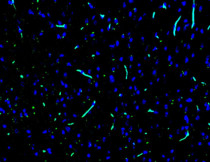
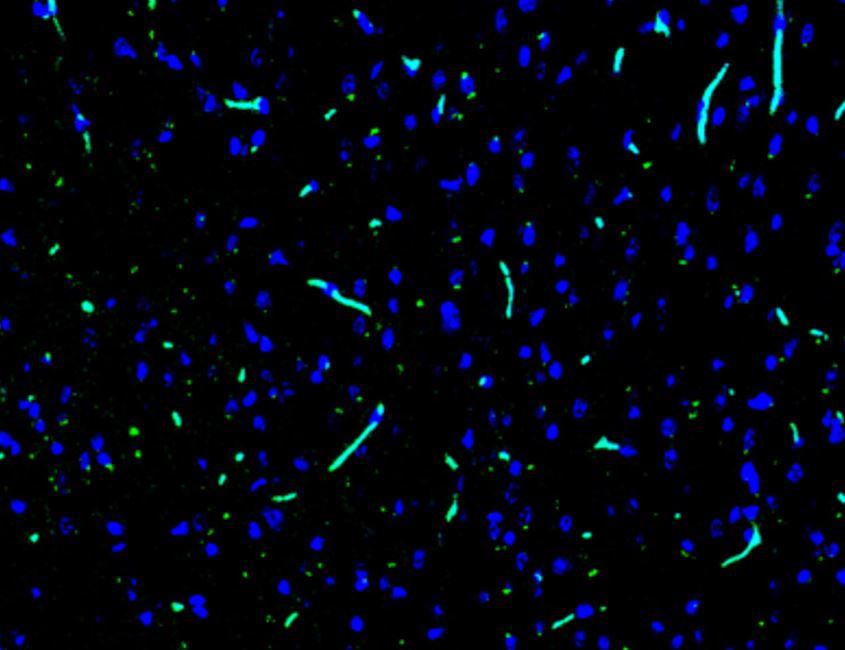
ARG67323 anti-TREM2 antibody IHC-P image
Immunohistochemistry: Mouse brain stained with ARG67323 anti-TREM2 antibody at 1:200 dilution.