ARG46609
anti-TRO antibody
anti-TRO antibody for Western blot,IHC-Formalin-fixed paraffin-embedded sections and Human,Mouse,Rat
Overview
| Product Description | Rabbit Polyclonal antibody recognizes TRO |
|---|---|
| Tested Reactivity | Hu, Ms, Rat |
| Tested Application | IHC-P, WB |
| Host | Rabbit |
| Clonality | Polyclonal |
| Isotype | IgG |
| Target Name | TRO |
| Antigen Species | Human |
| Immunogen | A 16 amino acid synthetic peptide within the last 50 amino acids of human TRO. |
| Conjugation | Un-conjugated |
| Alternate Names | trophinin; TRO; MAGE-d3; MAGED3 |
Application Instructions
| Application Suggestion |
|
||||||
|---|---|---|---|---|---|---|---|
| Application Note | * The dilutions indicate recommended starting dilutions and the optimal dilutions or concentrations should be determined by the scientist. | ||||||
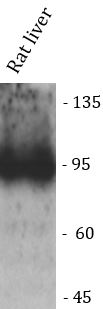
| Observed Size | 94 kDa |
Properties
| Form | Liquid |
|---|---|
| Purification | Affinity chromatography purified |
| Buffer | PBS and 0.02% Sodium azide. |
| Preservative | 0.02% Sodium azide |
| Concentration | 1 mg/ml |
| Storage Instruction | For continuous use, store undiluted antibody at 2-8°C for up to a week. For long-term storage, aliquot and store at -659°C or below. Storage in frost free freezers is not recommended. Avoid repeated freeze/thaw cycles. Suggest spin the vial prior to opening. The antibody solution should be gently mixed before use. |
| Note | For laboratory research only, not for drug, diagnostic or other use. |
Bioinformation
| Database Links | |
|---|---|
| Gene Symbol | TRO |
| Gene Full Name | trophinin |
| Background | This gene encodes a membrane protein that mediates cell adhesion between trophoblastic cells and the epithelial cells of the endometrium. The encoded protein participates in cell signalling during embryo implantation, and may also be involved in cancer formation. This gene is located near several other closely related genes on chromosome X. Alternative splicing results in multiple transcript variants. [provided by RefSeq, Sep 2012] |
| Function | Could be involved with bystin and tastin in a cell adhesion molecule complex that mediates an initial attachment of the blastocyst to uterine epithelial cells at the time of the embryo implantation. Directly responsible for homophilic cell adhesion.. [UniProt] |
| Calculated MW | 78, 157 kDa |
Images (2) Click the Picture to Zoom In
-
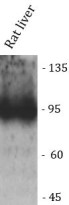
ARG46609 anti-TRO antibody WB image
Western blot: Rat liver stained with ARG46609 anti-TRO antibody.
-
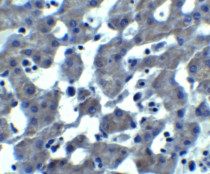
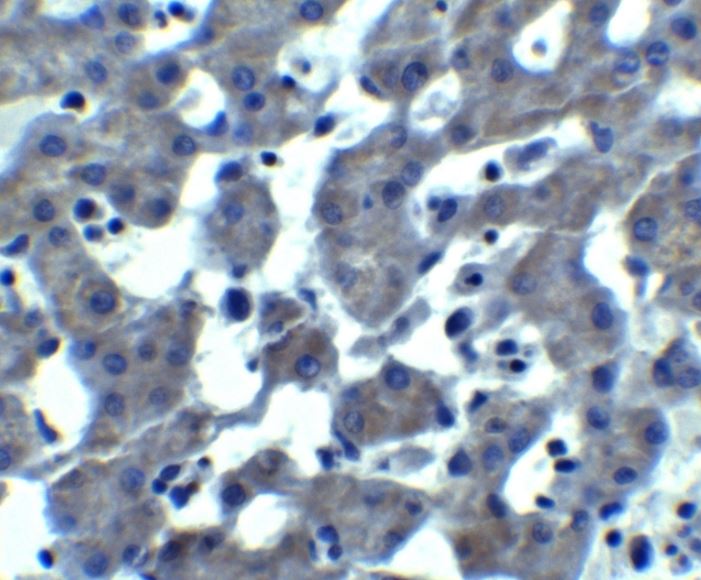
ARG46609 anti-TRO antibody IHC-P image
Immunohistochemistry: Mouse liver stained with ARG46609 anti-TRO antibody.