ARG46610
anti-TSC22D3 / GILZ antibody
anti-TSC22D3 / GILZ antibody for Western blot,IHC-Formalin-fixed paraffin-embedded sections and Human,Mouse
Overview
| Product Description | Rabbit Polyclonal antibody recognizes TSC22D3 / GILZ |
|---|---|
| Tested Reactivity | Hu, Ms |
| Tested Application | IHC-P, WB |
| Host | Rabbit |
| Clonality | Polyclonal |
| Isotype | IgG |
| Target Name | TSC22D3 / GILZ |
| Antigen Species | Human |
| Immunogen | A 16 amino acid synthetic peptide within the last 50 amino acids of human TSC22D3 / GILZ. |
| Conjugation | Un-conjugated |
| Alternate Names | TSC22D3; TSC-22R; hDIP; Protein DIP; DSIPI; TSC22 domain family protein 3; TSC-22-like protein; Glucocorticoid-induced leucine zipper protein; TSC-22-related protein; GILZ; Delta sleep-inducing peptide immunoreactor; DIP; DSIP-immunoreactive peptide |
Application Instructions
| Application Suggestion |
|
||||||
|---|---|---|---|---|---|---|---|
| Application Note | * The dilutions indicate recommended starting dilutions and the optimal dilutions or concentrations should be determined by the scientist. | ||||||
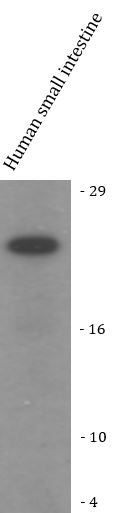
| Observed Size | 23 kDa |
Properties
| Purification | Affinity chromatography purified |
|---|---|
| Buffer | PBS and 0.02% Sodium azide. |
| Preservative | 0.02% Sodium azide |
| Concentration | 1 mg/ml |
| Storage Instruction | For continuous use, store undiluted antibody at 2-8°C for up to a week. For long-term storage, aliquot and store at -20°C. Storage in frost free freezers is not recommended. Avoid repeated freeze/thaw cycles. Suggest spin the vial prior to opening. The antibody solution should be gently mixed before use. |
| Note | For laboratory research only, not for drug, diagnostic or other use. |
Bioinformation
| Database Links | |
|---|---|
| Gene Symbol | TSC22D3 |
| Gene Full Name | TSC22 domain family, member 3 |
| Background | The protein encoded by this gene shares significant sequence identity with the murine TSC-22 and Drosophila shs, both of which are leucine zipper proteins, that function as transcriptional regulators. The expression of this gene is stimulated by glucocorticoids and interleukin 10, and it appears to play a key role in the anti-inflammatory and immunosuppressive effects of this steroid and chemokine. Transcript variants encoding different isoforms have been identified for this gene. [provided by RefSeq, Jul 2008] |
| Function | Protects T-cells from IL2 deprivation-induced apoptosis through the inhibition of FOXO3A transcriptional activity that leads to the down-regulation of the pro-apoptotic factor BCL2L11. In macrophages, plays a role in the anti-inflammatory and immunosuppressive effects of glucocorticoids and IL10. In T-cells, inhibits anti-CD3-induced NFKB1 nuclear translocation. In vitro, suppresses AP1 and NFKB1 DNA-binding activities (By similarity). Isoform 1 inhibits myogenic differentiation and mediates anti-myogenic effects of glucocorticoids by binding and regulating MYOD1 and HDAC1 transcriptional activity resulting in reduced expression of MYOG (By similarity). [UniProt] |
| Cellular Localization | Cytoplasm, Nucleus. [UniProt] |
| Calculated MW | 22 kDa |
Images (2) Click the Picture to Zoom In
-
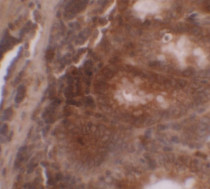
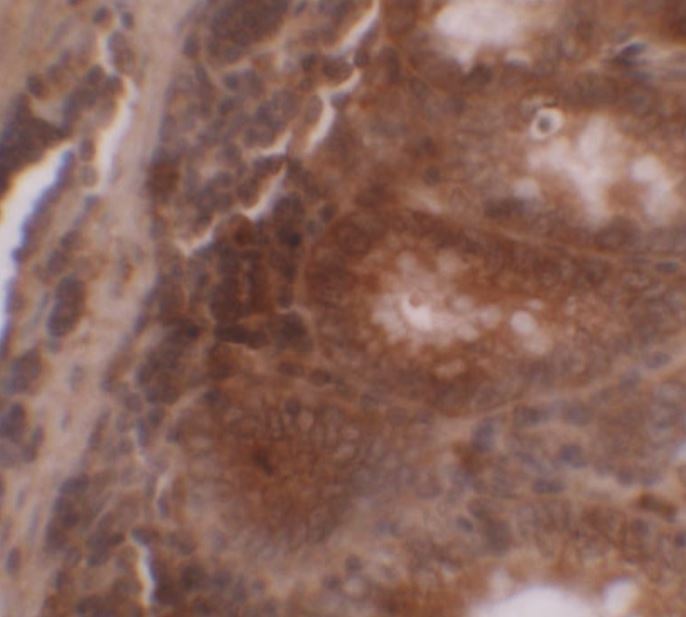
ARG46610 anti-TSC22D3 / GILZ antibody IHC-P image
Immunohistochemistry: Human small intestine stained with ARG46610 anti-TSC22D3 / GILZ antibody.
-
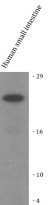
ARG46610 anti-TSC22D3 / GILZ antibody WB image
Western blot: Human small intestine stained with ARG46610 anti-TSC22D3 / GILZ antibody.