ARG83824
arigoPLEX® Human Growth Factor Multiplex ELISA Kit (VEGF, EGF, IGF1, PDGF BB)
Overview
| Product Description | ARG83824 arigoPLEX® Human Growth Factor Multiplex ELISA Kit (VEGF, EGF, IGF1, PDGF BB) is an Enzyme Immunoassay kit for the quantification of Human Growth Factor in serum, plasma and cell culture supernatants. See all Multiplex ELISA kits |
|---|---|
| Tested Reactivity | Hu |
| Tested Application | ELISA |
| Key Features | A multiplex ELISA that simultaneously detects 4 key factors using an ELISA reader at OD 450 nm — no beads, no specialized instrumentation required.
Request a Custom Multiplex ELISA Kit |
| Target Name | Growth Factor |
| Conjugation | HRP |
| Conjugation Note | Substrate: TMB and read at 450 nm. |
| Sensitivity | VEGF:31.25 pg/mL EGF:3.9 pg/mL IGF1:93.75 pg/mL PDGF BB: 7.81 pg/mL |
| Sample Type | Serum, plasma and cell culture supernatants. |
| Standard Range | VEGF:62.5-2000 pg/mL EGF:7.81-250 pg/mL IGF1:187.5-6000 pg/mL PDGF BB:15.625-500 pg/mL |
| Sample Volume | 50 µl |
Application Instructions
| Assay Time | 4 hours |
|---|
Properties
| Form | 96 well |
|---|---|
| Storage Instruction | Store components at 4°C or -20°C. Do not expose test reagents to heat, sun or strong light during storage and usage. Please refer to the product user manual for detail temperatures of the components. |
| Note | For laboratory research only, not for drug, diagnostic or other use. |
Bioinformation
| Gene Symbol | VEGF; EGF; IGF1; PDGF BB |
|---|---|
| Gene Full Name | Vascular Endothelial Growth Factor A; epidermal growth factor; insulin-like growth factor 1 (somatomedin C); Platelet Derived Growth Factor Subunit B |
| Background | VEGF:This gene is a member of the PDGF/VEGF growth factor family. It encodes a heparin-binding protein, which exists as a disulfide-linked homodimer. This growth factor induces proliferation and migration of vascular endothelial cells, and is essential for both physiological and pathological angiogenesis. Disruption of this gene in mice resulted in abnormal embryonic blood vessel formation. This gene is upregulated in many known tumors and its expression is correlated with tumor stage and progression. Elevated levels of this protein are found in patients with POEMS syndrome, also known as Crow-Fukase syndrome. Allelic variants of this gene have been associated with microvascular complications of diabetes 1 (MVCD1) and atherosclerosis. Alternatively spliced transcript variants encoding different isoforms have been described. There is also evidence for alternative translation initiation from upstream non-AUG (CUG) codons resulting in additional isoforms. A recent study showed that a C-terminally extended isoform is produced by use of an alternative in-frame translation termination codon via a stop codon readthrough mechanism, and that this isoform is antiangiogenic. Expression of some isoforms derived from the AUG start codon is regulated by a small upstream open reading frame, which is located within an internal ribosome entry site. The levels of VEGF are increased during infection with severe acute respiratory syndrome coronavirus 2 (SARS-CoV-2), thus promoting inflammation by facilitating recruitment of inflammatory cells, and by increasing the level of angiopoietin II (Ang II), one of two products of the SARS-CoV-2 binding target, angiotensin-converting enzyme 2 (ACE2). In turn, Ang II facilitates the elevation of VEGF, thus forming a vicious cycle in the release of inflammatory cytokines. [provided by RefSeq, Jun 2020] EGF:This gene encodes a member of the epidermal growth factor superfamily. The encoded protein is synthesized as a large precursor molecule that is proteolytically cleaved to generate the 53-amino acid epidermal growth factor peptide. This protein acts a potent mitogenic factor that plays an important role in the growth, proliferation and differentiation of numerous cell types. This protein acts by binding the high affinity cell surface receptor, epidermal growth factor receptor. Defects in this gene are the cause of hypomagnesemia type 4. Dysregulation of this gene has been associated with the growth and progression of certain cancers. Alternate splicing results in multiple transcript variants.[provided by RefSeq, May 2010] IGF1:IGF-I (Insulin-like Growth Factor-I) is a polypeptide growth factor that stimulates the proliferation of a wide range of cell types including muscle, bone, and cartilage tissue. Human IGF-I is a 7.6 kDa protein containing 70 amino acid residues. PDGF BB:This gene encodes a member of the protein family comprised of both platelet-derived growth factors (PDGF) and vascular endothelial growth factors (VEGF). The encoded preproprotein is proteolytically processed to generate platelet-derived growth factor subunit B, which can homodimerize, or alternatively, heterodimerize with the related platelet-derived growth factor subunit A. These proteins bind and activate PDGF receptor tyrosine kinases, which play a role in a wide range of developmental processes. Mutations in this gene are associated with meningioma. Reciprocal translocations between chromosomes 22 and 17, at sites where this gene and that for collagen type 1, alpha 1 are located, are associated with dermatofibrosarcoma protuberans, a rare skin tumor. Alternative splicing results in multiple transcript variants. [provided by RefSeq, Oct 2015] |
| Function | VEGF:Growth factor active in angiogenesis, vasculogenesis and endothelial cell growth.
Induces endothelial cell proliferation, promotes cell migration, inhibits apoptosis and induces permeabilization of blood vessels. Binds to the FLT1/VEGFR1 and KDR/VEGFR2 receptors, heparan sulfate and heparin. Binds to the NRP1/neuropilin-1 receptor. Binding to NRP1 initiates a signaling pathway needed for motor neuron axon guidance and cell body migration, including for the caudal migration of facial motor neurons from rhombomere 4 to rhombomere 6 during embryonic development (By similarity). [UniProt] EGF:EGF stimulates the growth of various epidermal and epithelial tissues in vivo and in vitro and of some fibroblasts in cell culture. Magnesiotropic hormone that stimulates magnesium reabsorption in the renal distal convoluted tubule via engagement of EGFR and activation of the magnesium channel TRPM6. Can induce neurite outgrowth in motoneurons of the pond snail Lymnaea stagnalis in vitro (PubMed:10964941). [UniProt] IGF1:The insulin-like growth factors, isolated from plasma, are structurally and functionally related to insulin but have a much higher growth-promoting activity. May be a physiological regulator of [1-14C]-2-deoxy-D-glucose (2DG) transport and glycogen synthesis in osteoblasts. Stimulates glucose transport in rat bone-derived osteoblastic (PyMS) cells and is effective at much lower concentrations than insulin, not only regarding glycogen and DNA synthesis but also with regard to enhancing glucose uptake. May play a role in synapse maturation. [UniProt] PDGF BB:Growth factor that plays an essential role in the regulation of embryonic development, cell proliferation, cell migration, survival and chemotaxis. Potent mitogen for cells of mesenchymal origin. [UniProt] |
| Highlight | Related Product: anti-VEGF antibody; anti-EGF antibody; anti-IGF1 antibody; anti-PDGF BB antibody; |
Images (5) Click the Picture to Zoom In
-
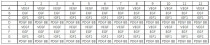
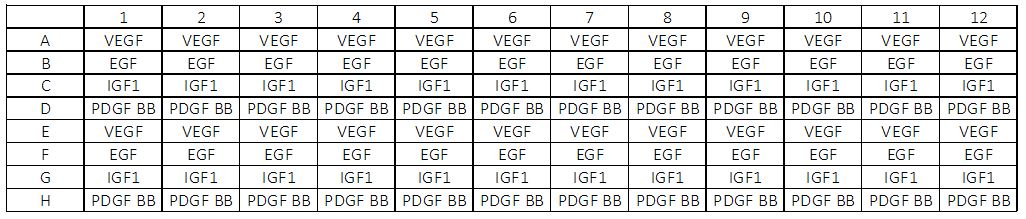
Antibodies Coating Pattern In Microtiter Plate of ARG83824 arigoPLEX® Human Growth Factor Multiplex ELISA Kit
-
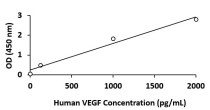
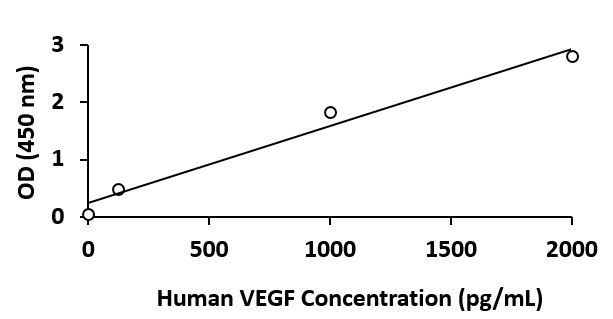
ARG83824 arigoPLEX® Human Growth Factor Multiplex ELISA Kit standard curve image
ARG83824 arigoPLEX® Human Growth Factor Multiplex ELISA Kit results of a typical standard for Human VEGF run with optical density reading at 450 nm.
-
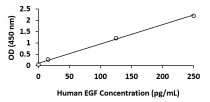
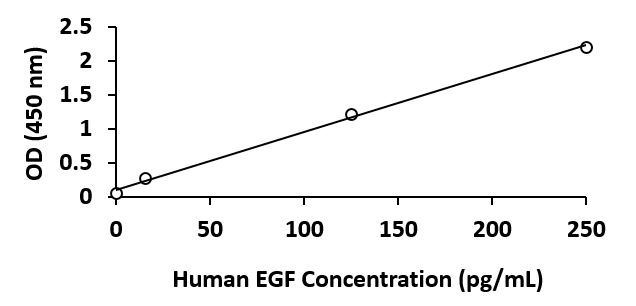
ARG83824 arigoPLEX® Human Growth Factor Multiplex ELISA Kit standard curve image
ARG83824 arigoPLEX® Human Growth Factor Multiplex ELISA Kit results of a typical standard for Human EGF run with optical density reading at 450 nm.
-
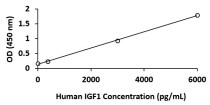
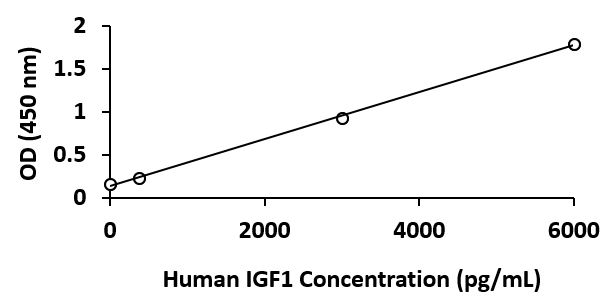
ARG83824 arigoPLEX® Human Growth Factor Multiplex ELISA Kit standard curve image
ARG83824 arigoPLEX® Human Growth Factor Multiplex ELISA Kit results of a typical standard for Human IGF1 run with optical density reading at 450 nm.
-
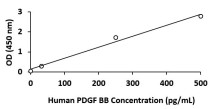
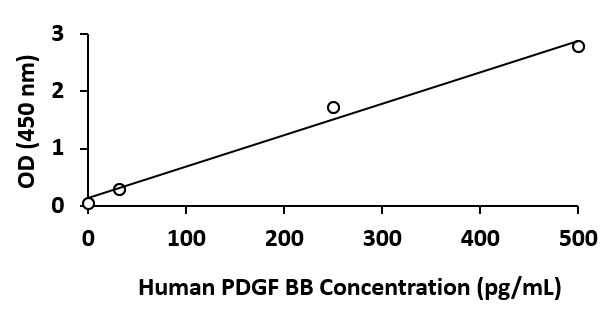
ARG83824 arigoPLEX® Human Growth Factor Multiplex ELISA Kit standard curve image
ARG83824 arigoPLEX® Human Growth Factor Multiplex ELISA Kit results of a typical standard for Human PDGF BB run with optical density reading at 450 nm.
| Title | Download Link |
|---|---|
| ARG83824 arigoPLEX® Human Growth Factor Multiplex ELISA Kit User manual |
 Download Download
|