Comprehensive Nrf2 Pathway Research Solution
Comprehensive Nrf2 Pathway Research Solution
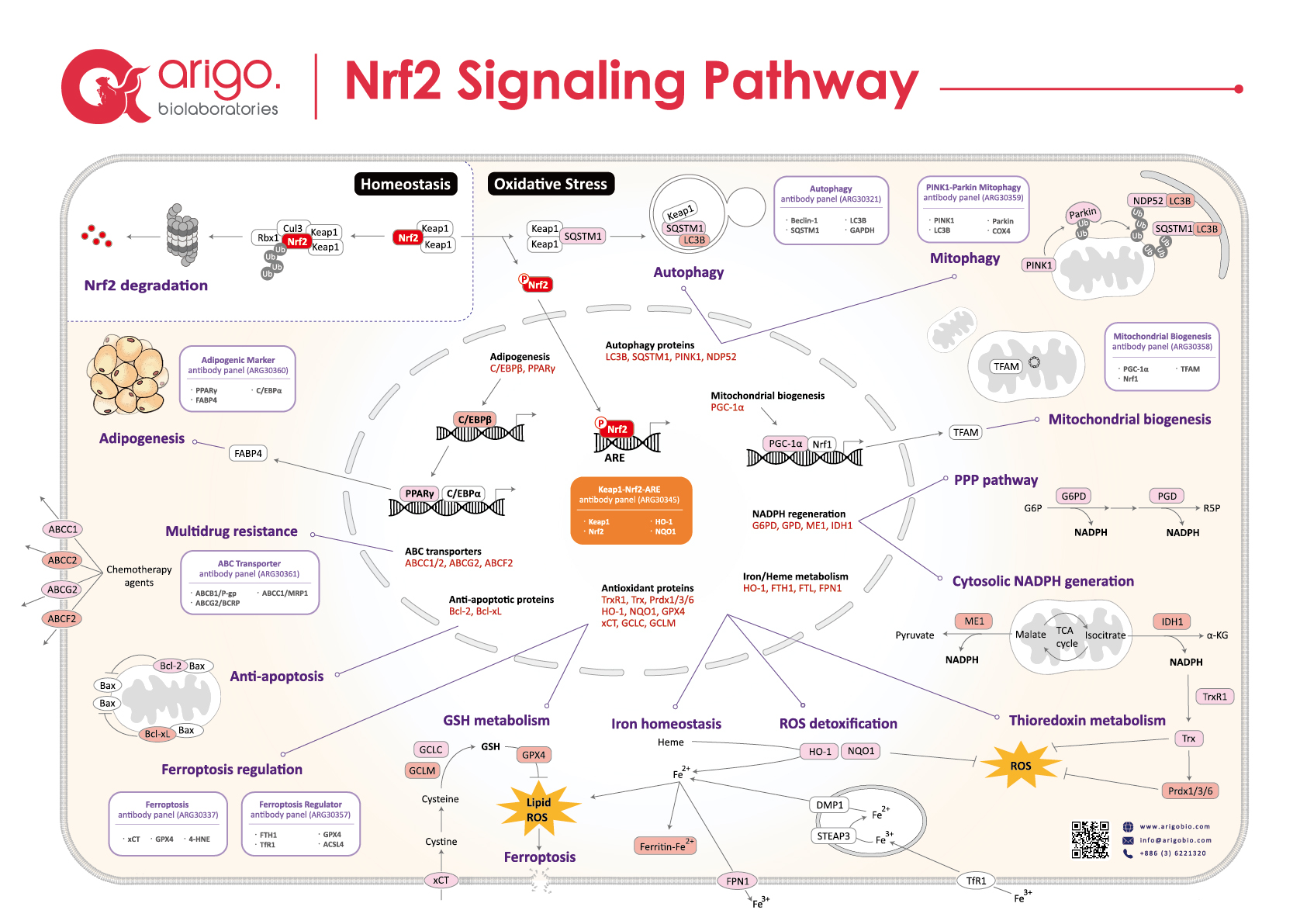
Nrf2 (Nuclear factor erythroid 2-related factor 2) is a master transcription factor that regulates cellular antioxidant defense and tissue homeostasis. Dysregulation of Nrf2 has been implicated in a wide range of diseases, including cancer, neurodegenerative, cardiovascular, metabolic, and inflammatory disorders, making Nrf2 pathway an important focus for disease research and therapeutic development.
arigo offers comprehensive research tools supporting the investigation of Nrf2 signaling, antioxidant defense, oxidative stress, and downstream pathway regulation.
● Keap1-Nrf2-ARE pathway for Antioxidant Defense
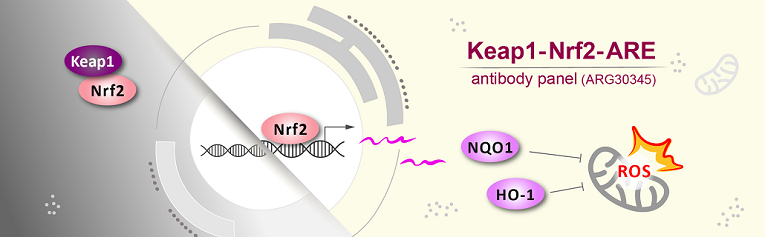
Under normal conditions, Nrf2 undergoes Keap1-mediated ubiquitination and proteasomal degradation, maintaining low basal levels. Under oxidative stress, Keap1 modification disrupts Nrf2 degradation, allowing Nrf2 to accumulate and translocate to the nucleus, where it binds antioxidant response elements (AREs) and induces antioxidant and detoxification proteins, including NQO1 and HO-1.
arigo's Keap1-Nrf2-ARE Antibody Panel (ARG30345) is designed to facilitate research into the Keap1/Nrf2/ARE pathway, supporting the investigation of Nrf2-mediated antioxidant responses and cellular stress defense.
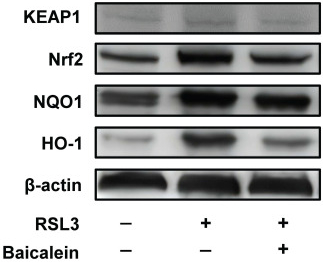 |
Keap1-Nrf2-ARE Antibody Panel (ARG30345)Benefits Data from Kuo et al., (2024) Int J Med Sci. 21(7):1257-1264. |
| Component | Reactivity | Application | Package |
| Keap1 antibody | Hu, Ms, Rat | IHC-P, WB | 20 ug |
| Nrf2 antibody | Hu, Ms | ICC/IF, IHC-P, IP, WB | 20 ul |
| NQO1 antibody | Hu, Ms, Rat | FACS, ICC/IF, IP, WB | 20 ul |
| HO-1 antibody | Hu, Ms, Rat | ICC/IF, IHC-P, IP, WB | 20 ul |
● Nrf2 and Autophagy
Nrf2 also contributes to the regulation of autophagy by inducing the expression of autophagy-related proteins, including LC3B and SQSTM1. SQSTM1 promotes Keap1 autophagic degradation, establishing a positive feedback loop that enhances Nrf2 activation and antioxidant defense. arigo's Autophagy Antibody Panel (ARG30321) supports research into the interplay between Nrf2 and autophagy.
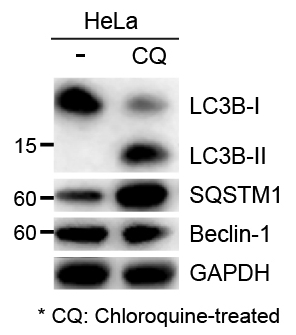 |
Autophagy Antibody Panel (ARG30321)Benefits |
● Nrf2-mediated NADPH-GSH-TRX axis
In addition to promoting ROS detoxification through NQO1 and HO-1, Nrf2 plays a critical role in maintaining cellular redox homeostasis through the NADPH-GSH-TRX axis. Glutathione (GSH) and thioredoxin (TRX) are two major cellular redox systems that rely on NADPH to sustain their reducing capacity. Nrf2 coordinates this redox network by promoting the biosynthesis of GSH, TRX, and NADPH, and inducing detoxification and antioxidant enzymes that protect cells from oxidative damage.
arigo offers a series of research tools to support advanced studies of Nrf2 signaling and NADPH-GSH-TRX axis.
NADPH generation |
GSH metabolismxCT antibody (ARG57998) |
TRX MetabolismTrxR1 antibody (ARG59280) Prdx1 antibody (ARG66175) |
● Nrf2 and Mitochondria Quality Control (MQC)
Mitochondria are the primary source of cellular energy (ATP) and major targets of ROS-induced damage. Mitochondrial quality control (MQC) maintains mitochondrial function by sustaining energy production and limiting oxidative damage. Nrf2 regulates MQC by coordinating mitochondrial biogenesis and mitophagy, thereby maintaining cellular energy and redox homeostasis.
Nrf2 promotes mitochondrial biogenesis by upregulating the master regulator PGC-1α. It also induces mitophagy by regulating mitophagy-related proteins PINK1, Parkin, NDP52, and LC3B. arigo provides Mitochondrial Biogenesis (ARG30358) and PINK1-Parkin Mitophagy (ARG30359) antibody panels to support the investigation of Nrf2-regulated MQC.
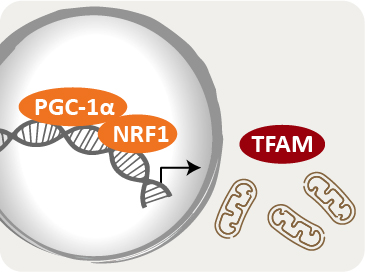 |
Mitochondrial Biogenesis Antibody Panel (ARG30358)Benefits |
| ......................................................................................................................................................................... | |
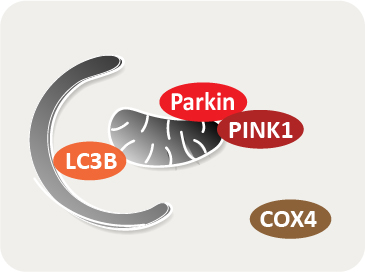 |
PINK1-Parkin Mitophagy Antibody Panel (ARG30359)Benefits |
● Nrf2 and Ferroptosis
Ferroptosis is an iron-dependent cell death characterized by lipid peroxidation and impairment of the GSH–GPX4 antioxidant defense system. Nrf2 suppresses ferroptosis by maintaining iron homeostasis, promoting GSH synthesis, and enhancing lipid peroxide detoxification.
Iron Homeostasis
Excessive intracellular Fe²⁺ levels trigger ferroptosis. Nrf2 upregulates FPN1 to promote iron export and Ferritin (including FTH1 and FTL) to enhance iron storage, thereby reducing intracellular Fe²⁺ pool and inhibiting ferroptosis.
GSH Synthesis
GSH is a key antioxidant for lipid peroxide detoxification. Nrf2 upregulates xCT to enhance cysteine uptake, as well as GCLC and GCLM to promote GSH synthesis, providing sufficient GSH for antioxidant defense.
Lipid Peroxide Detoxification
GPX4 uses GSH to reduce lipid peroxides. Nrf2 also upregulates GPX4 expression, enhancing GSH-dependent lipid peroxide detoxification and protecting cells from ferroptosis.
arigo's Ferroptosis (ARG30337) and Ferroptosis Regulator (ARG30357) antibody panels are ideal tools for investigating the molecular mechanism of Nrf2-regulated ferroptosis.
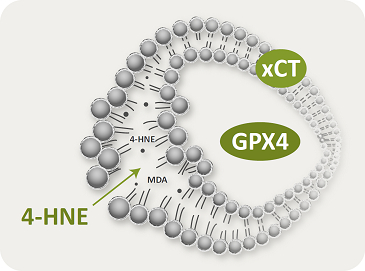 |
Ferroptosis Antibody Panel (ARG30337)Benefits |
| ......................................................................................................................................................................... | |
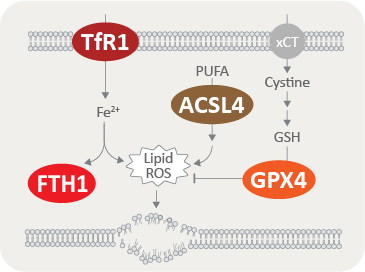 |
Ferroptosis Regulator Antibody Panel (ARG30357)Benefits |
● Nrf2 and Programmed Cell Death
Nrf2 not only inhibits ferroptosis but also regulates apoptosis and cuproptosis. Nrf2 suppresses apoptosis by upregulating the anti-apoptotic proteins Bcl-2 and Bcl-xL. It also inhibits cuproptosis by inducing Metallothionein expression, thus buffering the intracellular copper accumulation. arigo provides quality antibodies to support advanced research into the regulatory mechanisms of Nrf2 in apoptosis and cuproptosis.
| Bcl-2 antibody (ARG55188) Bcl-xL antibody (ARG40576) Metallothionein antibody (ARG42474) |
Cuproptosis-Proteotoxic • DLAT • DLST |
Fe-S Cluster Antibody Panel (ARG30355) • FDX1 • LIAS |
● Nrf2-mediated Drug Resistance
Nrf2 overactivation is a well-established driver of drug resistance in many cancers. Nrf2 mediates drug resistance by transcriptionally regulating genes involved in drug efflux, antioxidant defense, and cell survival.
Drug Efflux
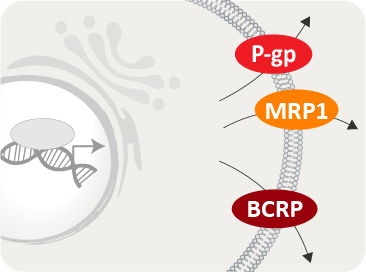
Nrf2 promotes the expression of ATP-binding cassette (ABC) transporters, such as MRP1, MRP2, and BCRP, which actively efflux a broad range of anticancer drugs from cancer cells, thereby reducing intracellular drug accumulation and contributing to chemotherapy resistance.
Antioxidant Defense
Many anticancer agents, including cisplatin and doxorubicin, induce oxidative stress. Nrf2 counteracts these effects by upregulating genes involved in GSH synthesis and detoxification, protecting cancer cells from drug-induced ROS and cell death.
Cell Survival
Nrf2 promotes cancer cell survival and increases anti-apoptotic signaling by inducing the expression of proteins such as Bcl-2 and Bcl-xL, thereby reducing chemotherapy-induced apoptosis.
arigo's ABC Transporter antibody panel (ARG30361) is a useful tool for studying Nrf2-regulated ABC transporter expression and its contribution to drug resistance.
 |
ABC Transporter Antibody Panel (ARG30361)Benefits |
● Nrf2 and Adipogenesis
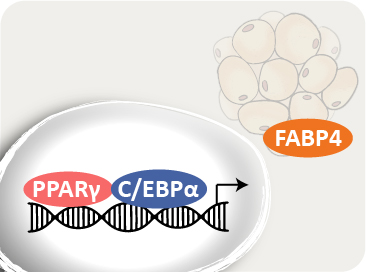
Adipogenesis, the process of forming new adipocytes (fat cells), plays an important role in fat storage and metabolic homeostasis. At the molecular level, adipogenesis is regulated by a transcriptional cascade involving C/EBPβ/δ and PPARγ. Subsequently, PPARγ and C/EBPα drive the expression of adipocyte-specific markers, including FABP4 (aP2) and LPL, promoting adipocyte differentiation and maturation.
Nrf2 has a dual role in adipogenesis. Nrf2 promotes adipogenesis by upregulating key adipogenic transcription factors PPARγ and C/EBPβ. Conversely, Nrf2 also induces AHR expression, promoting PPARγ proteasomal degradation and thereby suppressing adipogenesis.
arigo offers Adipogenic Marker Antibody Panel (ARG30360) to facilitate the research into Nrf2-regulated adipogenesis and the molecular mechanisms underlying adipocyte differentiation.
 |
Adipogenic Marker Antibody Panel (ARG30360)Benefits |
● Nrf2 Signaling Pathway Poster - Free Download